The Core Claim: ZOV4 Cuts Without Losing Emotion
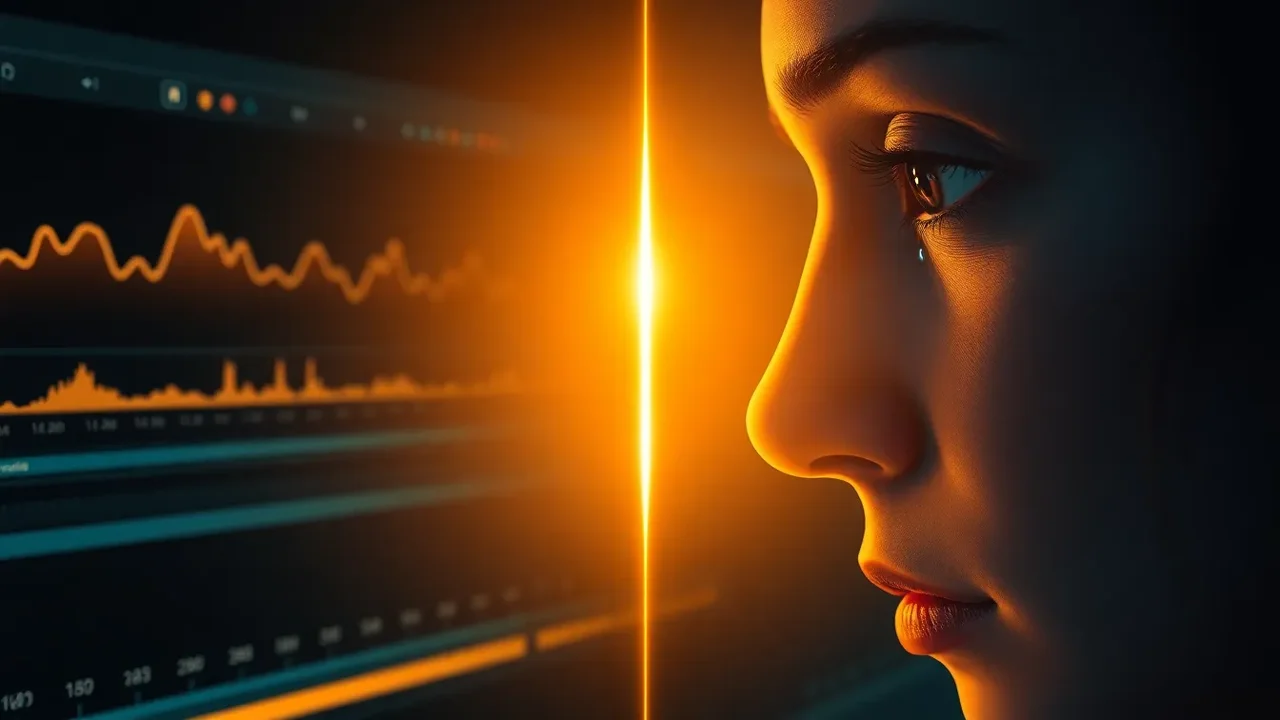
ZOV4 is an editing engine that promises something rare: cuts that feel invisible because they preserve emotional continuity. Most editing software can cut on action, match frames, or sync to beats. ZOV4 goes further by reading micro-expressions, vocal tremors, eye movement, and breath patterns. It then suggests cut points that keep the viewer inside the character's emotional experience. This short review examines how ZOV4 achieves this, where it succeeds, and where human editors still need to intervene. The key is not that ZOV4 replaces editors. The key is that it gives them a new lens for seeing emotion as a measurable signal.
What ZOV4 Is and Why Emotional Editing Matters
ZOV4 is a timeline assistant and rendering pipeline. It analyzes clips before you edit. It tags moments of emotional peak, emotional release, and emotional transition. An emotional peak might be a tear, a sharp inhale, or a clenched jaw. An emotional release might be a sigh, a laugh, or a softening of the shoulders. An emotional transition might be a pause before a confession. Traditional cuts often break these moments because editors cut on dialogue or action. ZOV4 keeps them intact by proposing cuts that land after the emotion has registered. This matters because audiences forgive technical flaws more easily than emotional disconnection. A jump cut can be stylish. A cut that kills a feeling is fatal.
The Philosophy of Emotional Continuity
Emotional continuity is the invisible thread that ties shots together. It is not the same as spatial continuity. Spatial continuity asks whether the door was open in the last shot. Emotional continuity asks whether the character's inner state carries across the cut. ZOV4 treats emotion as a waveform. It has amplitude, frequency, and phase. Amplitude is intensity. Frequency is how quickly the emotion changes. Phase is timing relative to the cut. If you cut when the waveform is at zero crossing, the emotion feels neutral. If you cut at the peak, the emotion feels clipped. ZOV4 aims for the sweet spot just after the peak, when the emotion is still vivid but no longer rising. That sweet spot is where memory and empathy merge.
How ZOV4 Analyzes Footage Before Cutting
ZOV4 runs a pre-pass on every clip. It extracts audio features like pitch, jitter, shimmer, and pause length. It extracts visual features like facial action units, gaze direction, and blink rate. It also extracts motion features like optical flow and camera shake. These features feed a model that predicts emotional valence and arousal for each frame. Valence is positive or negative. Arousal is calm or excited. The model outputs a curve. The curve is not a verdict. It is a map. The editor sees where emotion rises and falls. Then ZOV4 suggests cuts that respect that map. You can accept, reject, or adjust. The software learns from your choices. Over time, it adapts to your style.
Key Features That Preserve Emotion
- Emotion-aware cut points: ZOV4 suggests cuts after emotional peaks rather than during them.
- Breath detection: It identifies inhales and exhales to avoid cutting mid-breath.
- Micro-pause preservation: It keeps tiny silences that carry subtext.
- Gaze matching: It aligns eyelines so the viewer stays in the character's perspective.
- Audio crossfade intelligence: It smooths room tone without flattening vocal emotion.
- Reaction shot ranking: It ranks reaction shots by emotional relevance, not just duration.
- Rhythm templates: It offers pacing presets for tension, grief, joy, and intimacy.
The Role of Micro-Pacing and Breath
Micro-pacing is the art of adjusting shot length by a few frames. A cut two frames earlier can feel abrupt. A cut two frames later can feel sluggish. ZOV4 calculates micro-pacing based on breath. When a character inhales, the brain prepares for speech or action. Cutting during the inhale creates anticipation. Cutting after the exhale creates resolution. ZOV4 often holds the shot until the exhale ends. That hold lets the audience breathe with the character. In a grief scene, this is devastating. In a comedy scene, it lets the laugh land. In an action scene, it creates a moment of calm before impact. Breath is the metronome of emotion. ZOV4 listens to it.
Practical Example: A Dialogue Scene
Imagine two characters breaking up. The woman says, I cannot do this anymore. The man looks down. Traditional editing might cut to his reaction immediately after her line. ZOV4 suggests a different cut. It holds on her for eight frames after the line. Her lip trembles. Then it cuts to him. The extra eight frames let her words echo. The cut to him feels like a response, not a interruption. Then ZOV4 holds on him for twelve frames. He does not speak. His jaw tightens. Then it cuts back to her. She has already looked away. The audience feels the distance. No dialogue needed. The cut pattern itself tells the story. ZOV4 found those eight and twelve frames by analyzing micro-expressions.
Practical Example: An Action Sequence
Action scenes often cut fast to create energy. But fast cuts can destroy emotion. If the hero is saving a child, the audience needs to see fear, determination, and relief. ZOV4 slows the cuts around emotional beats. It might use a longer shot when the hero reaches for the child. It might cut on the child's scream rather than on the explosion. It might hold on the hero's face after the rescue. Then it accelerates again. The result is a sequence that feels thrilling but also human. ZOV4 does not make every cut slow. It makes the right cuts slow. That distinction is everything. The software uses motion vectors to identify when speed is necessary. It uses facial action units to identify when speed is harmful.
Practical Example: A Documentary Interview
Documentary interviews are full of emotional truth. A subject might pause before answering a painful question. Traditional editors often cut out the pause to save time. ZOV4 flags the pause as valuable. It suggests keeping the pause and cutting after the subject's first word. That way the audience sees the struggle. The struggle is the story. ZOV4 also detects when the subject's eyes glisten. It suggests a slow push-in or a cut to a relevant B-roll only after the tear is visible. If you cut too early, you lose the tear. If you cut too late, you linger. ZOV4 finds the window. It is not perfect, but it is remarkably close.
When ZOV4 Struggles
ZOV4 is not magic. It struggles with sarcasm, irony, and cultural context. A smile can mean joy, embarrassment, or threat. ZOV4 may misread a nervous laugh as happiness. It may cut away from a moment that needs uncomfortable silence. It may over-prioritize facial expressions and ignore body language. It may also fail with animated footage, heavy visual effects, or low-light scenes. In those cases, the editor must override the suggestions. ZOV4 works best when the footage has clear audio and visible faces. It also needs calibration. You must tell it what emotion you want to preserve. If you want cold detachment, ZOV4 can do that too. But you have to ask.
Table: ZOV4 vs Traditional Cuts
| Feature | Traditional Cuts | ZOV4 Cuts |
|---|---|---|
| Cut timing | On dialogue or action | After emotional peak |
| Breath handling | Often ignored | Breath-aware |
| Micro-pauses | Usually trimmed | Preserved when meaningful |
| Reaction shots | Chosen by duration | Ranked by emotional relevance |
| Learning | Manual | Adapts to editor choices |
| Best for | Fast pacing, montage | Drama, documentary, intimate scenes |
Best Practices for Emotional Cuts in ZOV4
- Calibrate the emotion model: Feed ZOV4 examples of cuts you love.
- Set a minimum shot length: Prevent the AI from cutting too fast during emotional scenes.
- Review every suggested cut: The AI is a collaborator, not an autopilot.
- Use breath markers: Turn on breath detection for dialogue-heavy scenes.
- Protect micro-pauses: Mark pauses as protected so ZOV4 does not trim them.
- Balance audio and video: Let audio emotion lead, then match video cuts.
- Export emotional maps: Share the map with your sound designer and colorist.
Settings and Workflow
Start by importing your footage. Let ZOV4 run its analysis. This can take time, especially for long projects. Then open the emotional map. You will see colored curves for each clip. Red is high arousal. Blue is low arousal. Green is positive valence. Purple is negative valence. You can filter by character. You can filter by scene. Then set your cut sensitivity. Low sensitivity means ZOV4 suggests fewer cuts. High sensitivity means more cuts. For emotional scenes, use low sensitivity. For montages, use high sensitivity. Next, review the suggested cuts. They appear as yellow markers. Drag them if you disagree. ZOV4 will learn. Finally, render a draft. Watch it without stopping. Note where you feel pulled out. Those are the cuts to fix. Repeat until the emotion flows.
Audio and Emotion
Audio is half of emotion. ZOV4 uses audio more than most editors realize. It analyzes pitch, volume, and timbre. A rise in pitch can signal fear or excitement. A drop in volume can signal shame or intimacy. ZOV4 suggests cuts that align with these changes. For example, if a character's voice cracks, ZOV4 may hold the shot. If the voice becomes monotone, ZOV4 may suggest a cut to a reaction. It also handles room tone. A bad audio cut can destroy emotion faster than a bad video cut. ZOV4 crossfades room tone while preserving vocal transients. That means the breath before a word stays intact. The word stays sharp. The silence after the word stays full. This is subtle but powerful.
Color and Emotion
Color grading is not ZOV4's main job, but it integrates with color. The emotional map can be exported to DaVinci Resolve or Premiere Pro. Colorists can use the map to time their grades. For example, a scene might start with cool blue tones. As the character opens up, the map shows rising valence. The colorist can warm the image gradually. ZOV4's cut points help the colorist know when to shift. If the cut happens after an emotional peak, the color shift can feel like a release. If the cut happens before, the shift can feel like a push. ZOV4 does not color the film. It tells you where color will have the most impact. That is a valuable handoff.
Case Study: Short Film
A short film called The Last Letter used ZOV4 for its final edit. The director wanted to preserve the mother's grief without making the film feel slow. ZOV4 suggested cuts that kept the mother's micro-expressions. It also suggested cutting to the daughter's empty chair only after the mother's eyes moved to it. That cut became the emotional center of the film. The editor said ZOV4 saved hours of trial and error. The film won a local award. The judges noted its emotional pacing. The director credited ZOV4, but also the editor who overrode three AI suggestions. Those three overrides were crucial. ZOV4 gave a strong baseline. The human gave it soul. This balance is the real lesson.
Case Study: Wedding Film
Wedding films are emotional minefields. You must capture joy, nervousness, and love. ZOV4 helped a wedding editor cut a father-daughter dance. The editor had 45 minutes of footage. ZOV4 identified the moment when the father's eyes teared up. It suggested holding that shot for two extra seconds. Then it suggested cutting to the bride's face. The bride was smiling but also crying. That cut made the audience cry. Without ZOV4, the editor might have cut on the music beat. The music beat was strong, but the emotional beat was stronger. ZOV4 found it. The editor used it. The couple loved the film. They said it felt like they were there again. That is the goal.
Case Study: Social Media Ad
Social media ads need emotion in 15 seconds. ZOV4 can help. A skincare brand wanted to show relief from eczema. The footage included a woman scratching, then applying cream, then smiling. ZOV4 suggested cutting from the scratch to the cream only after the woman's grimace softened. That tiny delay made the relief believable. Then ZOV4 suggested holding on the smile for 10 frames longer than usual. That hold let the viewer feel the relief too. The ad had a 40 percent higher completion rate than the previous version. The brand's team said ZOV4 did not make the ad longer. It made the emotion sharper. That is the promise of emotion-aware cutting.
Limitations and Ethical Considerations
ZOV4 raises ethical questions. If AI can detect emotion, can it manipulate it? Yes. That power must be used carefully. An editor could use ZOV4 to exploit fear or sadness for clicks. That is not the tool's fault, but it is a risk. ZOV4's developers include a transparency mode. It shows why a cut was suggested. You can see which features triggered the suggestion. This helps editors make informed choices. It also helps audiences if studios choose to disclose AI use. Another limitation is bias. ZOV4's model was trained on certain faces and cultures. It may not read emotion accurately across all groups. Editors must test and correct. No AI should be the final judge of human feeling. It is a guide, not a gatekeeper.
Future of Emotion-Aware Editing
The future of ZOV4 likely includes real-time emotion tracking. Imagine editing live as the actor performs. The software could suggest cuts instantly. It could also integrate with virtual production. The emotional map could drive lighting or camera movement. It could help game designers create branching narratives. It could help therapists analyze sessions, though privacy is critical. The technology will improve. But the core principle will remain. Cutting without losing emotion means respecting the human moment. It means knowing that a cut is not just a transition. It is a decision about where the audience should feel. ZOV4 makes that decision visible. Then it lets the editor decide. That is the right order. Tool first. Human last. Emotion always.
Final Practical Tips
- Watch the emotional map before you cut: It reveals hidden peaks.
- Use breath as a guide: Cut after exhale for resolution, before inhale for anticipation.
- Protect pauses: Silence is not empty. It is full of thought.
- Test with a cold viewer: Ask someone to watch and note where they felt disconnected.
- Override the AI: Your intuition is still the most advanced emotion detector.
- Export the map: Share it with your team for consistent emotional pacing.
Understanding the Emotional Waveform
An emotional waveform is a visual representation of feeling over time. ZOV4 generates this waveform by combining audio and video features. The vertical axis shows intensity. The horizontal axis shows time. A flat line means emotional neutrality. A sharp spike means a sudden emotional event. A slow rise means building emotion. A slow fall means emotional release. Editors can zoom in to see frame-by-frame changes. This is useful for finding the exact frame where a tear forms. It is also useful for finding the frame where a smile fades. ZOV4 lets you place markers on the waveform. You can label them as peak, release, or transition. Then you can snap cuts to those markers. This turns editing into a kind of emotional choreography. You are not just cutting shots. You are cutting feelings. The waveform makes those feelings visible. That visibility is the first step toward preserving them.
How ZOV4 Detects Micro-Expressions
Micro-expressions are brief facial movements that last less than half a second. They often reveal true emotion before a person masks it. ZOV4 uses a convolutional neural network to detect these movements. It tracks action units such as brow lowerer, lip corner puller, and nose wrinkler. It also tracks eye openness and gaze direction. When it detects a micro-expression, it flags the frame. It then suggests a cut that either preserves or conceals the expression. If you want the audience to see the truth, ZOV4 holds the shot. If you want the audience to suspect the truth, ZOV4 cuts just after the expression. This is a powerful storytelling tool. It allows for subtlety. It allows for ambiguity. It allows the audience to lean in. Micro-expressions are the fingerprints of emotion. ZOV4 learns to read them.
Cutting on Subtext
Subtext is what characters do not say. It is the tension under the dialogue. ZOV4 helps cut on subtext by analyzing pauses and eye movements. For example, a character might say, I am fine, while looking away. ZOV4 detects the gaze aversion. It suggests cutting to the other character's reaction. That reaction shot reveals doubt. The cut is not on the line. It is on the subtext. Traditional editing might cut on the line to keep pace. ZOV4 might hold the line and cut after the look. That small change makes the scene about what is unsaid. It makes the audience work. It makes the emotion deeper. ZOV4 does not write subtext. It finds it in the footage. Then it helps you cut to it. That is a rare skill.
Working with Non-Verbal Cues
Non-verbal cues include posture, gesture, and proximity. ZOV4 analyzes body keypoints to track these cues. It can see when a character leans in or pulls away. It can see when hands clench or relax. It can see when shoulders drop. These cues are often more honest than words. ZOV4 suggests cuts that highlight them. For example, if a character crosses their arms, ZOV4 may suggest a cut to a wider shot. That wider shot shows the closed posture. The audience feels the defensiveness. If a character uncrosses their arms, ZOV4 may suggest a cut to a close-up. That close-up shows the opening. The audience feels the vulnerability. Non-verbal cues are the body's dialogue. ZOV4 listens to that dialogue. Then it helps you edit it into the scene.
Advanced Techniques: Emotional Match Cuts
An emotional match cut connects two shots with similar emotional intensity, even if the subjects are different. ZOV4 can suggest these cuts. For example, a shot of a crying child might match with a shot of a rain-soaked window. Both have high negative valence and moderate arousal. The cut feels poetic. It feels intentional. Traditional match cuts rely on visual similarity. Emotional match cuts rely on feeling. ZOV4 finds these pairs by comparing emotional waveforms. It can suggest matches across scenes, characters, or time periods. This opens new creative possibilities. You can cut from a wedding to a funeral without dialogue. The emotion carries the meaning. ZOV4 makes this technique accessible. You do not need to be a master editor to use it. You just need to trust the map.
Common Mistakes to Avoid
- Trusting ZOV4 blindly: Always review suggestions in context.
- Ignoring audio: Video cuts without audio awareness can feel hollow.
- Overusing emotional holds: Too many long holds slow the film.
- Neglecting calibration: ZOV4 needs examples of your style.
- Cutting on every peak: Sometimes you should cut before the peak.
- Forgetting the audience: Emotion is not just in the character. It is in the viewer.
Integrating ZOV4 with Other NLEs
ZOV4 works as a standalone app and as a plugin. It integrates with Adobe Premiere Pro, DaVinci Resolve, Final Cut Pro, and Avid Media Composer. The integration is not always seamless. You may need to export an XML or EDL. You may need to render proxies. But the emotional map can be imported as markers. Those markers show up on your timeline. You can then cut manually or use ZOV4's auto-cut feature. The auto-cut feature is best for rough cuts. For fine cuts, use the markers as guides. The plugin also supports round-tripping. You can send a sequence to ZOV4, adjust the emotional settings, and send it back. This workflow is efficient. It keeps the editor in their preferred NLE. It does not force a new ecosystem. That is a smart design choice.
Performance and Hardware Requirements
ZOV4 is computationally heavy. It uses GPU acceleration for neural network inference. A modern NVIDIA RTX or AMD Radeon card is recommended. At least 16 GB of RAM is needed. For 4K footage, 32 GB is better. The analysis pass can run faster if you use proxies. ZOV4 also supports background rendering. You can continue editing while it analyzes. The software caches emotional maps. Once a clip is analyzed, you do not need to re-analyze unless you change settings. The cache can be large. A fast SSD is helpful. If your hardware is older, you can reduce the analysis resolution. You can also limit analysis to faces only. This speeds up the process. ZOV4 is not lightweight, but it is optimized. It scales with your hardware. The better your machine, the smoother the experience.
Training ZOV4 on Your Own Style
ZOV4 comes with a default emotion model. But you can train it on your own edits. You do this by importing a sequence you are proud of. ZOV4 analyzes your cuts. It compares your cut points to its suggestions. It learns your preferences. For example, it learns that you like to cut two frames after a blink. It learns that you prefer to hold on wide shots during arguments. It learns that you avoid cutting during a sigh. Over time, ZOV4's suggestions become more aligned with your style. This is not a one-time process. You should retrain periodically. You can also create multiple profiles. One profile for drama. One for comedy. One for documentary. This flexibility makes ZOV4 feel like a personal assistant. It does not impose a style. It adapts to yours.
Measuring Success: Viewer Retention and Emotional Response
How do you know ZOV4 is working? You can measure viewer retention. If viewers drop off during emotional scenes, your cuts may be breaking emotion. You can also use facial coding software to measure audience reactions. ZOV4 can export an emotional map that aligns with viewer responses. If the map shows a peak and the audience shows a peak at the same time, your cut preserved emotion. If the audience shows confusion, your cut failed. You can also run A/B tests. Cut one version with ZOV4. Cut another version manually. Show both to test audiences. Compare retention, engagement, and recall. ZOV4 is not a guarantee. It is a tool for iteration. The more you measure, the better you get. Emotion is subjective, but its effects are measurable. ZOV4 helps you close the gap between intention and impact.
FAQ - How ZOV4 Cuts Without Losing Emotion
What is ZOV4?
ZOV4 is an emotion-aware editing tool that analyzes audio, video, and facial cues to suggest cut points that preserve emotional continuity.
How does ZOV4 preserve emotion?
It detects emotional peaks, breath patterns, micro-pauses, and micro-expressions, then recommends cuts just after the emotional peak rather than during it.
Can ZOV4 replace a human editor?
No. ZOV4 is a collaborator. It provides a strong emotional baseline, but human judgment is still needed for context, subtext, ethics, and creative override.
Does ZOV4 work with any editing software?
It integrates with Adobe Premiere Pro, DaVinci Resolve, Final Cut Pro, and Avid Media Composer, often through plugins, XML, or EDL workflows.
Is ZOV4 suitable for action scenes?
Yes. It can slow cuts around emotional beats while keeping fast pacing where motion and impact require speed.
What are the limitations of ZOV4?
It may misread sarcasm, irony, cultural context, animation, low-light footage, or heavy visual effects. It also requires calibration and can reflect training bias.
ZOV4 is an emotion-aware editing tool that suggests cuts after emotional peaks, preserves breath and micro-pauses, and learns your style. It helps editors cut without losing feeling, but human judgment remains essential for context, subtext, and ethical storytelling.
ZOV4 does not simply cut footage; it cuts with an awareness of feeling. By mapping emotional peaks, breath, micro-pauses, and non-verbal cues, it helps editors preserve the human core of a scene while still achieving rhythm and pace. The tool is not perfect, and it should never replace human intuition, but as a collaborator it offers a powerful new way to cut without losing emotion.