Understanding ZOV4 Blocking Language
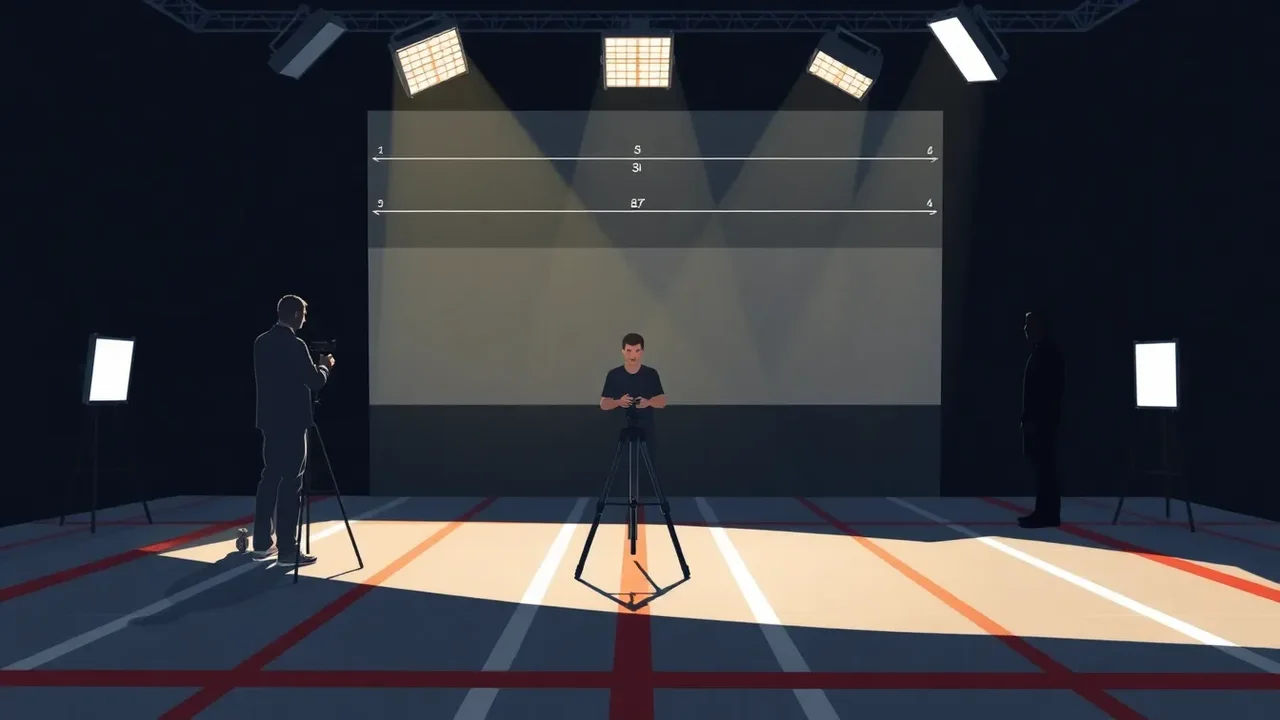
ZOV4 drama shorts are built on a precise blocking language that treats every actor position as a narrative signal. Unlike traditional film blocking, which often prioritizes wide master shots, ZOV4 shorts compress story into vertical frames and rapid beats. The blocking must communicate relationship, power, and subtext within seconds. Directors use a grid of invisible lines, called the ZOV4 axis, to place actors in zones that the camera can read instantly. The axis runs from foreground to background and left to right, creating a map of emotional distance. When an actor crosses a line, the audience feels a shift in control. This is the first secret: blocking is not decoration; it is grammar.
The Three Pillars of ZOV4 Blocking
The three pillars are proximity, level, and orientation. Proximity defines intimacy and threat. Level defines power and vulnerability. Orientation defines attention and alliance. In ZOV4 shorts, these pillars are exaggerated because the frame is narrow. A character who steps six inches closer can dominate the screen. A character who drops to a knee can lose all authority. A character who turns their shoulder can break a conversation into a duel. Directors rehearse these shifts like choreography, marking each beat with a number. The result is a scene that feels inevitable even when it is highly artificial.
- Proximity: Controls intimacy, threat, and the size of the emotional gap between characters.
- Level: Controls power and vulnerability through height differences and posture.
- Orientation: Controls attention and alliance through shoulder angles and gaze direction.
The ZOV4 Spatial Grid
The spatial grid divides the vertical frame into nine zones. The top three zones suggest aspiration, threat, or surveillance. The middle three zones carry dialogue and negotiation. The bottom three zones suggest weakness, concealment, or grounding. ZOV4 directors often block a power shift by moving an actor from the bottom zone to the top zone in a single cut. The grid also includes depth layers: foreground, midground, and background. A character in the foreground can block another character, literally erasing them from the story. A character in the background can observe without being observed. This layering creates dramatic irony.
| Zone | Meaning | Typical Use |
| Top Left | Threat or surveillance | Antagonist watching from above |
| Top Center | Aspiration or judgment | Hero looking up or being judged |
| Top Right | Hidden power | Reveal of a secret ally |
| Middle Left | Negotiation | Two characters talking |
| Middle Center | Confrontation | Direct conflict or decision |
| Middle Right | Alliance | Supporting character enters |
| Bottom Left | Weakness | Victim crouching or hiding |
| Bottom Center | Grounding | Character sits or kneels |
| Bottom Right | Concealment | Object or clue hidden low |
How to Mark the Grid on Set
Marking the grid requires tape, sandbags, and consistent camera height. The director places a T-mark for the camera and then marks actor positions with colored tape. Red tape is for power positions, blue for vulnerable positions, and yellow for transition paths. The first assistant director calls out zone numbers before each take. Actors learn to hit their marks without looking down. In ZOV4 shorts, the grid is often rotated for reverse angles, but the emotional meaning remains. The secret is consistency: if the grid changes, the audience loses the map.
Camera Height and Emotional Power
Camera height is the most underrated blocking secret. A high angle makes a character small, trapped, or guilty. A low angle makes them dominant, heroic, or threatening. An eye-level angle creates neutrality, which is rare in ZOV4 drama because neutrality kills tension. Directors often start a scene at eye level and then tilt or crane to a high angle as the character loses control. The movement itself becomes the story. In vertical shorts, height changes are more visible because the frame is tall. A slight tilt can feel like a landslide.
The Power Shift Tilt
The power shift tilt is a signature ZOV4 move. The camera begins low, looking up at a character who seems in charge. As the dialogue turns, the camera rises above them, and the actor looks up. The blocking must support this: the actor steps back, lowers their chin, and opens their hands. The other actor steps forward and occupies the center zone. The tilt is not just camera work; it is a physical negotiation. When done well, the audience feels the shift in their stomach. When done poorly, it looks like a random camera move.
Blocking for Vertical Shorts
Vertical shorts change blocking because the frame is tall and narrow. Horizontal staging that works in widescreen will look empty or cramped. ZOV4 directors use vertical stacking: one actor above another, one actor in the foreground and one in the background, or a diagonal line that uses the full height. They avoid placing two actors side by side unless the scene is about equality or alliance. They use hands and props to fill the lower frame. They use ceilings, doorways, and shadows to fill the upper frame. The secret is to think in columns, not rows.
The Foreground Blocker Technique
The foreground blocker technique places a shoulder, a hand, or an object in the extreme foreground to create depth. In ZOV4 shorts, this is often a character who listens but does not speak. The blocker can frame the speaker, creating a sense of pressure. When the blocker moves, the frame opens, and the speaker gains relief. When the blocker leans in, the frame closes, and the speaker loses power. This technique is cheap, fast, and emotionally powerful. It also hides cuts and creates natural transitions. Directors should use it sparingly to avoid visual clutter.
Movement Choreography in ZOV4
Movement in ZOV4 shorts is choreographed like dance. Every step has a purpose. A step forward is an attack. A step back is a retreat. A step sideways is a dodge. A circle is a trap. Directors block actors on counts, often using a four-count or eight-count rhythm. The camera may move on the same counts or counter to them. When actor and camera move together, the scene feels smooth. When they move against each other, the scene feels tense. The secret is to never let an actor move without a reason. Random movement destroys the grammar.
The Cross and Counter-Cross
The cross is when an actor moves from one side of the frame to the other. The counter-cross is when another actor moves in the opposite direction. In ZOV4 drama, a cross can signal a change in topic or loyalty. A counter-cross can signal conflict. Directors often use a cross to reveal a hidden character or an important object. They use a counter-cross to create a near-collision that raises tension. The timing must be precise: if the actors cross too early, the frame feels empty; if too late, the frame feels crowded. Rehearsal is essential.
Eyeline and Triangle Principles
Eyelines are invisible lines between characters. In ZOV4 shorts, eyelines are often broken to create unease. A character who looks at the wrong person can signal betrayal. A character who looks at the camera can break the fourth wall. The triangle principle places three characters in a triangle, with one at the apex. The apex character has power. If the triangle rotates, power shifts. Directors use triangles to stage arguments, love triangles, and interrogations. The camera can sit at one point of the triangle, making the audience a participant. This is a key blocking secret.
Breaking the Eyeline for Suspense
Breaking the eyeline is a simple way to create suspense. If two characters are talking but one looks slightly off, the audience wonders what they see. If a character looks at a door, the audience expects someone to enter. If a character looks at the floor, the audience expects a hidden object. ZOV4 directors use these breaks to plant clues. They also use them to misdirect. A false eyeline can make the audience look left while the reveal happens on the right. The secret is to control where the audience looks without cutting.
Lighting and Blocking Integration
Blocking and lighting cannot be separated. An actor who steps into a shadow loses power. An actor who steps into a pool of light gains focus. ZOV4 shorts often use practical lights, such as lamps, phones, and neon signs, as blocking markers. The actor moves from one light pool to another, and the story moves with them. Directors should mark light pools on the floor and rehearse transitions. A backlight can create a silhouette, which hides identity. A sidelight can reveal half a face, which suggests duality. The secret is to block for light, not just for camera.
Shadow as a Character
In ZOV4 drama shorts, shadow can act as a character. A shadow can loom over a victim before the attacker appears. A shadow can split a face into good and evil. A shadow can indicate a presence in an empty room. Directors block actors so their shadows fall in specific places. They use flags and cutters to shape shadows. They also use negative fill to deepen darkness. The audience may not notice the shadow consciously, but they feel it. This is an advanced secret that separates amateur shorts from professional ones.
Blocking Secrets for Conflict Scenes
Conflict scenes require clear power dynamics. ZOV4 directors use three main patterns: the standoff, the corner, and the chase. In a standoff, actors face each other at equal distance. In a corner, one actor traps another against a wall or frame edge. In a chase, one actor pursues while the other retreats. The camera should stay on the aggressor when they are winning and switch to the defender when they are losing. The blocking should change when the power changes. If the conflict is verbal, use small movements: a lean, a finger point, a jaw clench. If physical, use larger movements but keep them safe.
The Corner Trap
The corner trap is a classic ZOV4 blocking secret. The director places the victim in a corner of the frame, with walls or furniture on two sides. The aggressor stands in the open, blocking the exit. The camera is often low and close, making the victim feel small. As the scene progresses, the aggressor steps closer, and the victim shrinks. The trap can be broken when the victim ducks under an arm or pushes past. The moment of escape should be a release for the audience. If the victim never escapes, the scene becomes hopeless, which can be powerful but must be intentional.
Blocking Secrets for Romance and Tension
Romance in ZOV4 shorts is built on distance and touch. The director blocks the characters apart, then brings them together in stages. First, they share a frame but not a focus. Second, they share an eyeline. Third, they share a breath. Fourth, they touch. Each stage should be a separate beat. The camera can move closer with each beat, or it can stay still and let the actors move. The secret is to delay the touch. Anticipation is more powerful than contact. When the touch finally happens, the frame should be tight, and the background should be soft.
The Almost-Touch
The almost-touch is a blocking technique where hands hover near each other but do not connect. In ZOV4 shorts, this is often used in doorways, across tables, or in crowded spaces. The camera focuses on the hands, and the audience holds their breath. The director can extend the almost-touch by having another character interrupt or by cutting to a reaction. The almost-touch works because it creates a visual gap that the audience wants to close. When the touch finally happens, it should be earned. If it happens too soon, the scene feels cheap.
Blocking Secrets for Reveals and Twists
Reveals require precise blocking. The director must hide the reveal in plain sight, then use a movement to expose it. Common techniques include the reveal by step, the reveal by turn, and the reveal by foreground clear. In the reveal by step, a character steps aside to show something behind them. In the reveal by turn, a character turns to face the camera, showing a wound, a tattoo, or a tear. In the reveal by foreground clear, a foreground object moves out of the way. ZOV4 directors often combine these with a sound cue. The secret is to make the reveal feel inevitable but surprising.
Misdirection with Blocking
Misdirection is the art of making the audience look where you want them to look. ZOV4 directors use blocking to misdirect. They place a moving actor on one side of the frame while the important object appears on the other. They use a bright light or a loud sound to pull attention. They use a character who points or stares. The camera can also misdirect by racking focus. The secret is to give the audience a reason to look away. If the misdirection is too obvious, the audience feels tricked. If it is too subtle, they miss the reveal.
Practical Previsualization and Rehearsal
Previsualization is essential for ZOV4 shorts because time and budget are limited. Directors should create a floor plan, a shot list, and a storyboard before the shoot. The floor plan should show actor positions, camera positions, and light pools. The shot list should describe the blocking for each shot. The storyboard should show the vertical frame. During rehearsal, the director should walk the actors through the blocking without dialogue, then with dialogue, then with camera. The goal is to make the blocking automatic so that actors can focus on emotion.
The Five-Pass Rehearsal Method
The five-pass rehearsal method is a ZOV4 secret. Pass one: actors walk the blocking at half speed. Pass two: actors add dialogue. Pass three: camera operators join. Pass four: lighting and props are added. Pass five: full speed with no stops. This method catches problems early. It also builds muscle memory. Directors should not skip pass one, because actors who do not know the blocking will look lost on camera. They should not rush pass five, because the scene needs to feel alive. The method works for shorts and features alike.
Editing Rhythm and Blocking Coverage
Blocking determines editing. If the director blocks a scene in a long take, the editor has few choices. If the director blocks with coverage, the editor can control rhythm. ZOV4 shorts often use a mix: a master for geography, then singles for emotion. The secret is to block so that each shot has a different emotional value. A wide shot shows isolation. A medium shot shows negotiation. A close-up shows decision. The editor can then cut between these values to create a rising rhythm. Bad blocking gives the editor no options.
Match on Action and Blocking
Match on action is a cut that hides itself by continuing a movement. ZOV4 directors block actions so that they can be cut at the peak. For example, an actor reaches for a door in a wide shot, and the cut happens as the hand touches the knob in a close-up. The blocking must be consistent across both shots. The actor must repeat the same speed and direction. This requires discipline. When done well, the cut is invisible. When done poorly, the audience sees a jump. The secret is to mark the action and rehearse it from both angles.
Common ZOV4 Blocking Mistakes
The most common mistake is blocking for the camera instead of the story. Directors place actors in pretty compositions that do not mean anything. Another mistake is ignoring the vertical frame. Actors stand side by side and leave the top and bottom empty. A third mistake is moving actors without motivation. A fourth mistake is forgetting eyelines. A fifth mistake is letting the background distract. A sixth mistake is blocking without rehearsal. A seventh mistake is ignoring safety. These mistakes can be fixed with planning, but they often happen because the director is rushed.
- Pretty but empty: Composition without narrative meaning.
- Horizontal thinking: Ignoring the tall vertical frame.
- Unmotivated movement: Actors walk without a story reason.
- Broken eyelines: Gaze direction that confuses the audience.
- Background clutter: Distracting objects or extras.
- No rehearsal: Blocking that falls apart on set.
- Safety neglect: Risky positions or missing consent planning.
How to Fix Blocking Mistakes on Set
If a scene feels flat, the director can add a level change. If it feels confusing, the director can simplify the grid. If it feels slow, the director can add a cross or a counter-cross. If it feels false, the director can ask the actor to change their objective. If it feels cluttered, the director can remove a foreground blocker. If it feels empty, the director can add a background actor. The key is to diagnose the emotional problem, not just the visual problem. Blocking is a tool for emotion.
Advanced ZOV4 Blocking Techniques
Advanced techniques include the mirror block, the puppet block, and the vanishing point. The mirror block places two actors in identical poses to suggest similarity or fate. The puppet block has one actor manipulate another through touch or gaze. The vanishing point places actors on a line that converges at a distant point, creating a sense of destiny. These techniques are powerful but should be used sparingly. They can make a short feel theatrical or artificial. The director must ground them in character intention. When they work, they elevate the story.
The Mirror Block in Practice
To execute a mirror block, the director places two actors facing each other at the same distance from the camera. They perform the same action at the same time. The camera is centered. The effect is that the audience sees two versions of the same person. This can suggest a doppelganger, a memory, or a moral choice. In ZOV4 shorts, the mirror block is often used in dream sequences or confrontations. The actors must synchronize their movements. Even a small delay can break the illusion. Rehearsal with a metronome can help.
Case Study: A ZOV4 Drama Short Scene
Consider a scene where a detective interrogates a suspect. The detective starts in the top zone, standing. The suspect sits in the bottom zone. The camera is low, looking up at the detective. As the suspect gains confidence, they stand and move to the middle zone. The detective steps back and sits. The camera rises to eye level. The power has shifted. The blocking tells the story without dialogue. This is the ZOV4 approach. Every position has meaning. Every movement is a sentence. The director should map this before the shoot.
Breaking Down the Beats
Beat one: detective enters, blocks the exit. Beat two: suspect looks down, hides hands. Beat three: detective leans in, invades space. Beat four: suspect laughs, stands. Beat five: detective steps back, loses ground. Beat six: suspect takes the detective's chair. Beat seven: detective looks up from below. Beat eight: cut to black. Each beat is a blocking change. The camera supports each change. The lighting shifts from cold to warm. The sound design adds a low drone. This is how a ZOV4 short builds tension in ninety seconds.
FAQ - Blocking Secrets Behind ZOV4 Drama Shorts
What is ZOV4 blocking?
ZOV4 blocking is a precise system of staging actors in vertical drama shorts. It uses proximity, level, orientation, and a nine-zone grid to communicate power, emotion, and story beats without dialogue.
Why is vertical framing important?
Vertical framing changes blocking because the frame is tall. Directors must stack actors, use foreground blockers, and fill top and bottom zones. Side-by-side staging often looks empty.
How do I rehearse ZOV4 blocking?
Use the five-pass method: walk at half speed, add dialogue, add camera, add light and props, then run full speed. Mark the grid with tape and rehearse eyelines and crosses.
What are common ZOV4 blocking mistakes?
Common mistakes include pretty compositions without meaning, ignoring the vertical frame, moving actors without motivation, forgetting eyelines, and skipping safety or consent planning.
Can ZOV4 blocking work for action?
Yes. Action blocking uses standoffs, corner traps, and chases. Keep movements safe, rehearse with a stunt coordinator, and change blocking when power changes.
How does blocking affect editing?
Blocking gives the editor coverage and rhythm. A wide shot shows isolation, a medium shows negotiation, and a close-up shows decision. Good blocking creates options; bad blocking limits the cut.
ZOV4 drama shorts rely on precise blocking: a nine-zone grid, vertical framing, camera height, eyelines, and choreographed movement. These secrets control power, tension, and reveals. Rehearsal, notation, lighting integration, and safety planning help directors create professional, emotionally charged shorts that feel inevitable and visually striking.
Blocking secrets behind ZOV4 drama shorts combine spatial grammar, camera height, vertical framing, movement choreography, and emotional precision. By mastering the grid, rehearsing in passes, and integrating light and safety, directors can turn short scenes into powerful visual stories.