The Unique Pressure of ZOV4
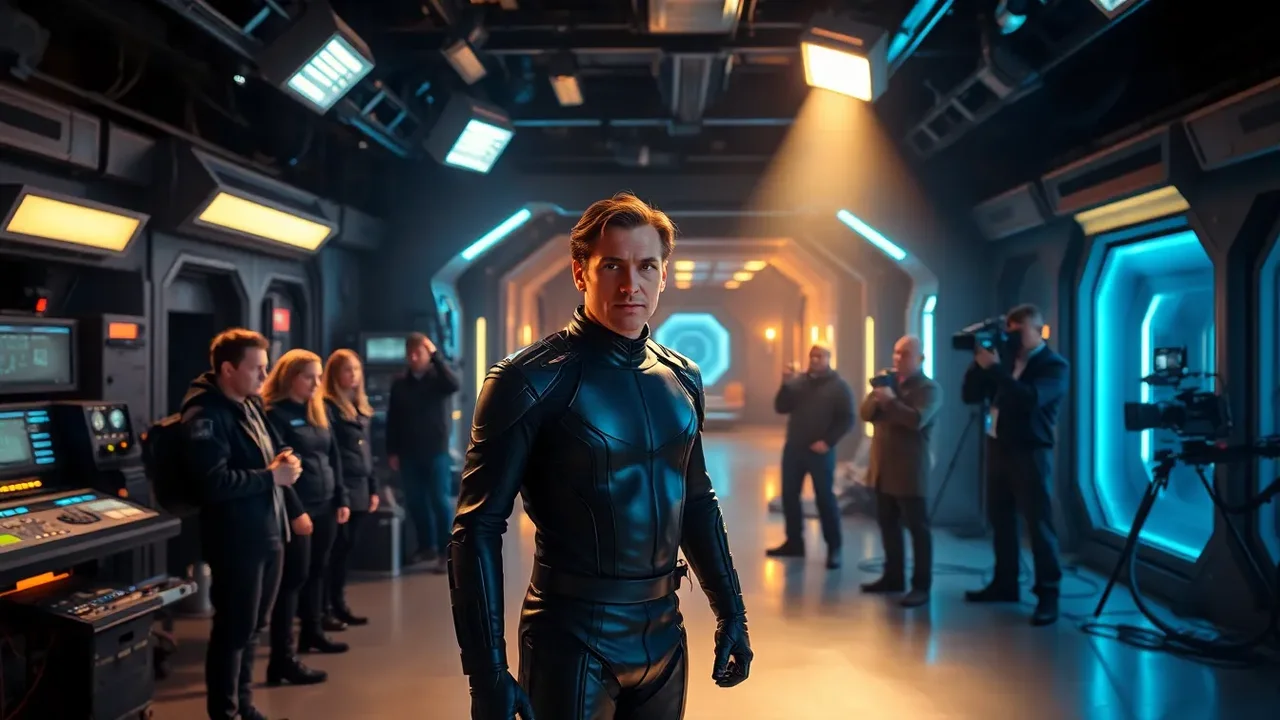
ZOV4 is not a typical production. Its scripts are dense with technical jargon, political subtext, and rapid-fire dialogue. Actors are cast for their ability to inhabit morally ambiguous characters who operate under extreme pressure. The show's creator encourages controlled improvisation, allowing performers to test alternate phrasings during rehearsal and sometimes during a take. When a ZOV4 actor improvises a perfect line, it is not random inspiration. It is the result of deep preparation, trust in scene partners, and an intuitive grasp of story architecture. The perfect line often arrives at the exact moment when the scripted dialogue feels too neat or too safe. It cracks the scene open and reveals a more dangerous truth. That truth can redefine a character, a relationship, or the entire season's trajectory.
Why ZOV4 Encourages Improvisation
The production's creative team believes that rigid adherence to a script can make even great writing feel rehearsed. In ZOV4, the camera often runs long after the scripted scene ends. Directors watch for unscripted reactions, overlaps, and interruptions. The editors then comb through footage for moments that feel alive. This process requires actors who can stay in character while inventing language that fits the established world. A perfect improvised line must sound as if it was always meant to be there. It must honor the character's vocabulary, the scene's rhythm, and the audience's expectations, while also subverting those expectations in a way that feels inevitable. When that happens, the line becomes part of the show's mythology. Fans quote it, critics analyze it, and other writers wish they had written it.
The Difference Between Improvisation and Writing
Improvisation is not writing on the spot. Writing can be revised, polished, and tested. Improvisation happens once, in real time, under lights and pressure. A ZOV4 actor cannot pause the scene to find a better word. They must commit fully, even if the line fails. The perfect line is therefore a high-wire act. It requires the actor to listen not only to the other characters but also to the invisible architecture of the story. They must know where the scene needs to go emotionally, even if they do not know the exact words. This is why the best improvised lines often feel simple. They are not clever for the sake of cleverness. They are precise. They land because they are true to the moment, not because they are ornate.
The Anatomy of a Perfect Improvised Line
A perfect improvised line has several recognizable qualities. It is contextually precise, character-true, emotionally economical, and surprising yet inevitable. It also respects the scene's power dynamics. In ZOV4, power is rarely stable. Characters are constantly negotiating alliances, betrayals, and fragile truces. An improvised line that shifts that balance can be more powerful than a page of scripted argument. For example, a character might say, I already signed your name. That single sentence can imply forgery, loyalty, or a trap. The actor's delivery determines which meaning dominates. If the line is perfect, the ambiguity becomes an asset. It gives the other actor something real to react to, and it gives the audience a puzzle they want to solve.
| Element | Description | ZOV4 Example |
|---|---|---|
| Contextual Precision | Fits immediate circumstances and environment | It stopped at the exact moment you lied. |
| Character Truth | Emerges from established psychology and vocabulary | I did it for your daughter. |
| Emotional Economy | Says more with fewer words and silence | You knew. |
| Surprise and Inevitability | Shocks while feeling retrospectively logical | You should have let her die. |
Contextual Precision
Contextual precision means the line fits the immediate circumstances of the scene. It references what has just happened, what is at stake, and what the character wants. In ZOV4, scenes often take place in cramped command centers, abandoned stations, or diplomatic corridors. The environment is part of the dialogue. An actor might improvise a line about a flickering light, a distant alarm, or the smell of coolant. That detail grounds the scene in physical reality. It also creates continuity. If the line is perfect, it will seem as though the set itself wrote it. The actor is not showing off. They are using everything available to make the moment more believable. This is why ZOV4 actors are trained to observe their surroundings and incorporate them without breaking character.
Character Truth
Character truth is the hardest element to fake. Every character in ZOV4 has a history, a vocabulary, and a set of defenses. A perfect improvised line must emerge from that psychology. It cannot sound like the actor's personal opinion. It must sound like something the character would say, even if the character has never said it before. This requires actors to build detailed inner lives for their roles. They know what their character ate for breakfast, what they fear, and what they would never admit. When they improvise, they draw from that reservoir. The line may be new, but it is not foreign. It feels like a natural extension of the character's existing behavior. That is why audiences often cannot tell which lines were scripted and which were invented on set.
Emotional Economy
Emotional economy means saying more with less. ZOV4 is not a show that relies on long monologues. Its most devastating moments are often quiet. A single word, a pause, or a broken sentence can carry more weight than a speech. When an actor improvises a perfect line, they often strip away excess language. They find the shortest path to the emotional core. For instance, instead of saying, I have always trusted you and now I feel betrayed, the actor might say, You knew. That is enough. The other actor must fill the silence with guilt, anger, or justification. The audience does the same. This economy creates intimacy. It invites viewers to lean in and participate in the meaning-making. It also makes the line highly quotable, because it is easy to remember and hard to forget.
Surprise and Inevitability
Surprise and inevitability are the twin engines of a perfect improvised line. The line must surprise the other actors, the director, and often the actor who said it. But it must also feel inevitable in retrospect. It should seem like the only thing that could have been said. This paradox is what makes improvisation so thrilling. The actor is not following a map, but they arrive at the destination as if they had one. In ZOV4, this often happens when a character finally admits a hidden motive. The admission is shocking, but the audience realizes the clues were there all along. The improvised line simply illuminates them. When done well, it can make the entire episode feel retroactively tighter. Viewers rewatch earlier scenes and notice new meanings. The line becomes a key that unlocks the story's deeper logic.
Case Study: The Corridor Scene
Consider a famous hypothetical scene from ZOV4's third season. Two rival operatives, Kael and Mira, meet in a dimly lit corridor. The script calls for Mira to accuse Kael of sabotage. Kael is supposed to deny it, then walk away. During the take, the actor playing Kael instead stops, looks at Mira, and says, I did it for your daughter. The line was not in the script. It changes everything. Mira's accusation is no longer about politics. It is about family. Kael's denial becomes a confession. The director keeps the camera rolling. Mira's actor, genuinely surprised, whispers, You should have let her die. The scene ends not with a walkaway but with a shared silence. The editor uses the take. The line becomes the most quoted moment of the season. It works because it is contextually precise, character-true, emotionally economical, and both surprising and inevitable.
Why the Line Worked
The line worked because the actor had done the homework. He knew Kael had a secret connection to Mira's daughter, a detail only hinted at in earlier episodes. He also knew Kael's primary defense was self-righteous sacrifice. By improvising, I did it for your daughter, he forced Mira to confront her own failures as a mother. The line was not a random provocation. It was a key that unlocked a door the script had kept closed. It also gave Mira's actor a genuine emotional event. Her response was not planned. It was a reaction to a new reality. That authenticity is visible on screen. Audiences can feel when a scene is truly alive. The corridor scene became a masterclass in how a single improvised line can redirect a narrative without breaking it.
Practical Techniques for ZOV4 Actors
Actors who want to improvise perfect lines in a ZOV4-style production need more than talent. They need discipline, preparation, and collaboration. The following techniques are used in rehearsal rooms and on set to create the conditions for magic. They are not shortcuts. They are habits that increase the odds of a meaningful improvisation. Remember that most improvised lines fail. The perfect line is rare. The goal is not to force brilliance but to remain open enough that brilliance can occur. This requires a balance of control and surrender. The actor must know the character so well that they can forget the script without forgetting the truth. They must also trust their scene partners to catch them if they fall.
- Deep Script Analysis: Know the scene's purpose, the character's objective, and the obstacles. Improvisation without understanding is just noise.
- Listening Beyond Words: Pay attention to breath, posture, and eye movement. The perfect line often responds to what is not said.
- Environmental Awareness: Use props, sounds, and spatial relationships. A line about a cold draft can be more powerful than a philosophical statement.
- Emotional Memory: Access personal experiences that parallel the character's situation, but keep them contained within the fiction.
- Yes, And: Accept what your partner offers and build on it. Never deny their reality, even if your character would disagree.
- Risk Calibration: Know when to push and when to hold. A perfect line in the wrong moment can damage the scene.
- Post-Scene Reflection: Review what worked and why. Improvisation is a skill that improves with deliberate practice.
Listening Beyond Words
Listening is the foundation of improvisation. In ZOV4, dialogue is often overlapping and fragmented. Characters interrupt each other, finish each other's sentences, and speak in code. An actor who is only waiting for their turn to talk will miss the cues that lead to a perfect line. True listening means being affected by the other actor. It means allowing their performance to change your emotional state. When you are genuinely listening, your response is not predetermined. It arises from the moment. This is why two actors who trust each other can create lines that neither could have written alone. The perfect line is often a gift from one actor to another. It says, I see what you are doing, and I am going to meet you there.
Staying in Character Under Pressure
Staying in character under pressure is essential. ZOV4 scenes often require actors to handle complex technical dialogue while maintaining emotional intensity. If an actor breaks character to invent a line, the audience will feel the seam. The trick is to let the character think. The actor does not search for a clever phrase. They inhabit the character's mind and let the words emerge from that state. This requires practice. Actors can train by doing improvisation exercises in character, even when the scene has nothing to do with the script. They can walk through the set as their character, handling props and reacting to imaginary events. Over time, the character's voice becomes a second nature. Then, when the pressure is highest, the actor does not need to invent. They simply speak as the character would.
Using the Environment
Using the environment is a powerful technique. ZOV4 sets are detailed and immersive. There are screens, cables, weapons, medical kits, and personal effects. An actor can improvise a line that references a specific object. For example, a character might pick up a broken watch and say, It stopped at the exact moment you lied. That line is not in the script, but it uses the prop to create meaning. The watch becomes a symbol. The line becomes memorable. Environmental improvisation also helps with continuity. If the actor notices a detail that the script ignored, they can incorporate it. This makes the world feel real. It also gives the editor more material to work with. A perfect line often comes from an actor who is fully present in the physical space of the scene.
Risk and Safety in Improvisation
Risk and safety must be balanced. Improvisation can lead to unexpected emotional territory. Actors may access real grief, anger, or fear. In ZOV4, the material is intense, and the line between character and self can blur. Professional productions establish safety protocols. Actors agree on boundaries before a scene. They have a safe word or gesture to signal discomfort. Directors check in after difficult takes. The goal is not to eliminate risk but to contain it. A perfect improvised line often comes from a place of vulnerability, but that vulnerability must be consensual. When actors feel safe, they are more willing to take creative risks. They know that if they go too far, they will be supported. This trust is what allows them to surrender to the moment and discover something extraordinary.
When Improvisation Goes Wrong
Not every improvised line is perfect. Many are forgettable. Some are actively harmful. An actor might improvise a line that contradicts established character history, breaks the tone, or undermines another actor's performance. In ZOV4, a bad improvised line can create continuity errors that ripple through the season. It can also damage trust between cast members. If one actor repeatedly ignores the script to steal focus, the ensemble suffers. Directors must therefore create a culture where improvisation is a tool, not a competition. The best ZOV4 actors know that the perfect line is not about being clever. It is about serving the story. They are willing to throw away a great line if it does not fit the scene. They are also willing to let another actor have the moment. This generosity is what separates a professional from a show-off.
Common Pitfalls
Common pitfalls include overacting, anachronism, and self-indulgence. Overacting happens when an actor tries too hard to be dramatic. The line becomes theatrical rather than truthful. Anachronism happens when the improvised language does not fit the show's established world. ZOV4 has a specific vocabulary, and a modern slang term can shatter the illusion. Self-indulgence happens when the actor prioritizes their own screen time over the scene's needs. They might add a line that is funny or shocking but irrelevant. These mistakes are easy to make, especially when the camera is rolling and adrenaline is high. The remedy is preparation and humility. Actors must remember that the perfect line is not a solo performance. It is a collaborative discovery. It belongs to the scene, not to the actor.
The Director's Role in Capturing the Perfect Line
The director plays a crucial role in capturing the perfect improvised line. They must create an environment where actors feel free to experiment. They must also know when to stop the scene and when to let it run. In ZOV4, directors often shoot multiple takes with different instructions. They might tell an actor to say the scripted line, then try something completely different. They watch for the moment when the scene shifts from performance to reality. When that moment happens, they do not interrupt. They signal the camera operators to keep rolling. They also protect the actors from outside distractions. After the take, they may ask the actor what they were thinking. They may ask the editor to flag the moment. The director is the guardian of the perfect line. Without their patience and attention, it might be lost in the noise.
Editing and the Perfect Line
Editing is where the perfect line finds its final form. A line that felt brilliant on set may not work in the cut. It may overlap with another line, or the camera angle may not capture the necessary emotion. Editors in ZOV4 are skilled at finding unscripted moments and weaving them into the narrative. They may use a reaction shot from a different take to make the line land. They may adjust the pacing to give the line room to breathe. Sometimes the perfect line is not a line at all. It is a look, a pause, or a breath. The editor recognizes that the absence of dialogue can be more powerful than any words. When an improvised line survives the editing process, it means it is truly essential. It has earned its place in the story.
Audience Impact and Meme Culture
When a ZOV4 actor improvises a perfect line, the audience often responds immediately. Social media explodes with quotes, GIFs, and theories. The line becomes a meme. It is printed on t-shirts, used as a caption, and referenced in other shows. This cultural afterlife is a testament to the line's power. It resonates beyond the immediate scene. Fans feel ownership over the moment because it was not scripted. They sense that they witnessed something spontaneous. This authenticity creates a deeper connection. It also puts pressure on future seasons. Writers may try to recreate the magic, but perfect lines cannot be forced. They emerge from specific conditions: trust, preparation, and risk. The best response is to appreciate the moment without trying to duplicate it. The lightning in the bottle is rare precisely because it cannot be manufactured.
Why Fans Quote Improvised Lines
Fans quote improvised lines because they feel like secrets. A scripted line is part of the official story. An improvised line feels like a backstage glimpse. It is as if the actor and character briefly merged. Fans also love the unpredictability. They know that the line was not planned, so it carries a charge of danger. In ZOV4, many of the most quoted lines are improvised. They are short, sharp, and emotionally loaded. They work as standalone statements, but they also gain meaning from their context. A fan can say the line to a fellow viewer and instantly evoke the entire scene. This shared language builds community. It also keeps the show alive between seasons. The perfect improvised line becomes a kind of folklore. It is passed down through fan communities, analyzed in video essays, and celebrated in conventions.
FAQ - When a ZOV4 Actor Improvises a Perfect Line
What makes an improvised line perfect in ZOV4?
A perfect ZOV4 improvised line is contextually precise, character-true, emotionally economical, and both surprising and inevitable. It serves the story rather than the actor's ego.
Can any actor improvise a perfect line?
Not every actor can, and not every attempt succeeds. It requires deep script analysis, strong listening skills, trust with scene partners, and the courage to risk failure in the moment.
How do directors capture improvised lines on set?
Directors create a safe, experimental environment, keep cameras rolling after scripted scenes end, and watch for shifts from performance to reality. They protect the moment and later work with editors to preserve it.
Why do fans love improvised lines so much?
Fans love them because they feel spontaneous and secret, like a backstage glimpse. They often become memes and shared community language, deepening the audience's connection to the show.
What are common pitfalls of improvisation in ZOV4?
Common pitfalls include overacting, anachronistic language, and self-indulgence. Actors must respect the script, the world, and their colleagues to avoid damaging the scene or the ensemble.
When a ZOV4 actor improvises a perfect line, it blends preparation, character truth, and trust. The line feels surprising yet inevitable, serving the story and creating iconic moments that resonate with fans, directors, and editors alike.
When a ZOV4 actor improvises a perfect line, it is a rare collision of preparation, trust, and risk. The moment cannot be forced, but it can be cultivated through deep character work, active listening, and a collaborative set. Such lines become part of the show's mythology, proving that even in a tightly scripted world, spontaneous truth can still break through and leave a lasting legacy.