Understanding the Shot List for Drama Short Stories
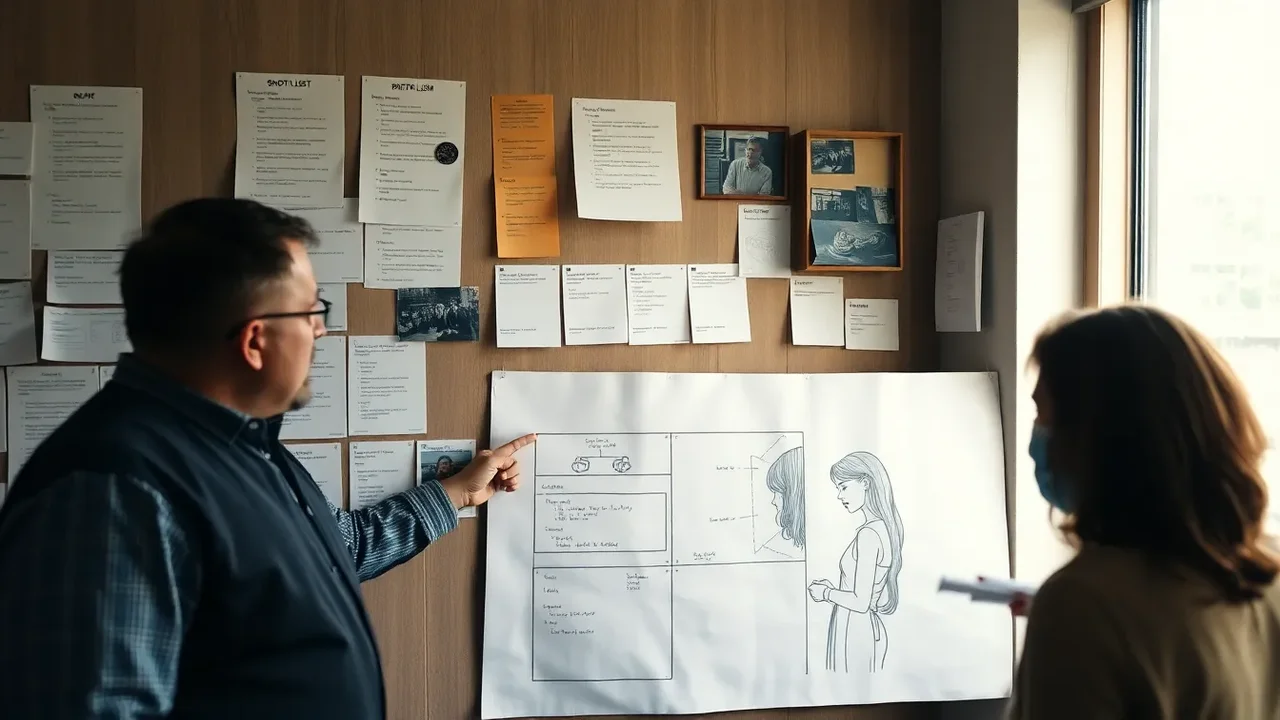
A shot list is a practical document that translates a screenplay into a sequence of camera setups. For drama short stories, it is more than a technical checklist. It is a map of emotional beats, visual subtext, and performance moments. Unlike action or comedy, drama relies on subtle shifts, pauses, glances, and reactions. A well-crafted shot list anticipates where the audience should look, when to move closer, and when to hold back. It helps the director, cinematographer, and editor protect the story's emotional arc while working within limited time and budget. Without a shot list, a drama short can become visually random, missing key reactions or overcovering unimportant dialogue.
Why Drama Shorts Demand Specific Coverage
Drama short stories compress character change into a brief runtime. Every shot must earn its place. A feature film can afford wide establishing shots and leisurely transitions. A short drama cannot. The shot list must prioritize the moments that reveal conflict, decision, and consequence. This means planning coverage around beats rather than pages. A beat is a unit of change: a character learns something, hides something, or decides something. For each beat, the shot list should answer: What is the most expressive angle? Is it a close-up on the eyes, a two-shot that shows distance, or a wide shot that isolates the figure? The goal is not to capture everything but to capture the right things.
Core Principles of Dramatic Shot Listing
First, serve the performance. In drama, the actor's face and body are the primary visual effects. The shot list should give the editor enough material to shape a performance without cutting away too early or too late. Second, respect the line. Continuity of screen direction keeps the audience oriented. Third, vary shot sizes intentionally. A progression from wide to medium to close-up can tighten tension. A sudden wide shot can create emotional distance or relief. Fourth, use movement with purpose. A slow push-in can signal growing realization. A handheld follow can create urgency. Fifth, plan for inserts and cutaways. Hands, objects, empty chairs, and doorways can carry symbolic weight. Sixth, always include a master shot for safety. Even if you never use it, the master protects the scene's geography and gives the editor an anchor.
Shot Types and Their Dramatic Functions
Each shot size carries emotional associations. An extreme wide shot places characters in a landscape, emphasizing isolation or scale. A wide shot shows full bodies and spatial relationships. A medium wide shot introduces gesture and posture. A medium shot captures dialogue and body language. A medium close-up focuses on face and shoulders. A close-up isolates the face. An extreme close-up magnifies eyes, mouth, or objects. Over-the-shoulder shots create intimacy and point of view. Two-shots show connection or conflict. Insert shots reveal details. Cutaways provide context or metaphor. In a drama short, the shot list should not use every type equally. Instead, it should build a visual vocabulary that matches the story's emotional temperature. A quiet reconciliation might use long takes and medium shots. A confrontation might use tight close-ups and quick cuts.
Building a Beat-by-Beat Shot List
Start by reading the script and marking beats. Use a pencil or digital tool to note where the emotional energy changes. For each beat, write a one-sentence objective: 'Maya admits she lied,' 'Jon realizes he is alone,' 'The mother chooses silence.' Then list the shots that would best capture that objective. Consider the following questions. What does the audience need to see? What can be implied rather than shown? Where should the camera be still? Where should it move? What is the point of view? Whose reaction matters most? How will this shot cut with the previous and next shot? A beat-by-beat approach prevents the shot list from becoming a generic coverage pattern. It also helps the director communicate with actors and crew because every setup has a dramatic reason.
Coverage Strategies for Dialogue Scenes
Dialogue scenes are the backbone of many drama shorts. A common mistake is to shoot only singles and a master. That approach works, but it can feel flat. A richer strategy includes a master, two-shots, over-the-shoulders, singles, inserts, and reaction shots. The master establishes geography. Two-shots show power dynamics. Over-the-shoulders create alignment with one character. Singles allow the editor to control pacing. Inserts capture hands, phones, cups, or letters. Reaction shots are essential because drama often lives in the listener's face. When planning dialogue coverage, note who has power in each exchange. If power shifts, the shot list should shift too. Maybe the camera starts on the dominant character, then slowly moves to the subordinate as they gain agency. This visual shift can be more powerful than dialogue.
Visual Grammar for Emotional Shifts
Shot lists can use visual grammar to externalize internal change. Consider these patterns. Isolation: place a character alone in a wide frame, then cut to a close-up to show the emotional impact. Pressure: use a slow push-in during a difficult conversation. Release: cut to a wide shot after a confession. Disorientation: use an off-kilter angle or a handheld pan. Memory: use a different lens, frame rate, or color temperature. Connection: use a two-shot with both faces in focus. Separation: use a shot with one character in focus and the other blurred. Power: place one character higher or larger in the frame. Vulnerability: place a character lower or smaller. These patterns are not rules, but they give the shot list a coherent language. When the director and cinematographer share this language, they can make faster decisions on set and create a more unified film.
Practical Shot List Template
A useful shot list template includes columns for scene number, shot number, shot size, camera angle, movement, lens, description, dialogue/action, and notes. The description should be brief but specific. For example: 'MCU Maya, she listens, slight tremble.' The notes column can include lighting, props, continuity, or performance reminders. A template keeps the crew aligned and makes it easy to check off setups. It also helps the editor understand the intended rhythm. When shooting a drama short, you may not have time to fill every column perfectly. Prioritize the description and movement. A simple template is better than no template. You can use paper, a spreadsheet, or a dedicated app. The key is to keep it readable and adaptable.
Example Shot List Table for a Short Drama Scene
| Shot | Size | Angle | Movement | Description | Dramatic Purpose |
|---|---|---|---|---|---|
| 1 | Wide | Eye level | Static | Empty kitchen, morning light | Establish isolation |
| 2 | Medium | Eye level | Slow push | Elena reads letter | Build curiosity |
| 3 | MCU | Slightly high | Static | Elena's face, eyes fill | Reveal emotion |
| 4 | Insert | Top down | Static | Letter in hands | Show details |
| 5 | Two-shot | Eye level | Static | Elena and empty chair | Emphasize absence |
| 6 | CU | Eye level | Static | Elena whispers name | Intimate climax |
| 7 | Wide | Eye level | Static | Elena alone at table | Release and reflect |
This table shows how a simple scene can be covered with seven shots. Each shot has a clear dramatic purpose. Notice that the camera does not move in every shot. Movement is reserved for the push-in on shot two, which builds curiosity. The wide shots frame the scene and provide release. The close-up and insert provide emotional detail. A shot list like this can be shot in a few hours with minimal equipment. It also gives the editor multiple options while preserving the scene's emotional arc.
Lighting, Lenses, and Movement in the Shot List
Shot lists often focus on framing, but lighting and lens choices are equally important. For drama shorts, lighting can suggest mood, time, and psychological state. A shot list can include notes like 'soft window light,' 'single practical lamp,' 'high contrast,' or 'cool moonlight.' Lens choice affects intimacy and distortion. A 35mm lens shows more environment. An 85mm lens compresses space and isolates the face. A 50mm lens is a natural middle ground. Movement should be motivated. A dolly-in can feel like growing pressure. A handheld shot can feel unstable. A Steadicam can feel smooth and dreamlike. A static shot can feel observational. When you list a shot, ask: What does the camera movement say about the character's emotional state? If the answer is unclear, consider keeping the camera still and letting the performance carry the scene.
Working with Actors and Continuity
A shot list should not become a cage. Actors need freedom to find truthful moments. The director should share the emotional intention of each shot, not just the technical setup. For example, instead of saying 'we need a close-up here,' say 'this is where she realizes she has lost him.' That gives the actor a clear objective. Continuity is also critical. Drama shorts often rely on subtle details: a tear, a trembling hand, a glance. The shot list should note continuity items such as wardrobe, props, makeup, and eyelines. A script supervisor or continuity person can track these details. If you are working with a small crew, assign one person to take photos and notes after each setup. This prevents mismatched eyelines, disappearing props, or inconsistent tears. Good continuity protects the emotional reality of the story.
Editing Rhythm and Shot List Planning
Shot lists are written for the edit. The editor will assemble the performance, but the shot list determines what raw material exists. Think about rhythm. A drama short might use long takes to build tension, then quick cuts to release it. Or it might use a series of slow close-ups to create intimacy. The shot list should include enough coverage to manipulate time. If a scene needs to feel fast, plan more angles and shorter takes. If it needs to feel slow, plan longer takes and fewer cuts. Also consider transitions. A match cut on action, a cut on a look, or a cut from a wide to a close-up can create meaning. The shot list can note potential transition points. For example: 'cut from her hand to his hand' or 'match cut on the door closing.' These notes help the editor find the film's rhythm.
Low-Budget and Indie Approaches
Independent drama shorts often have limited resources. A shot list becomes even more important because time is precious. Prioritize shots that carry the most emotional weight. Use natural light when possible. Choose locations that allow multiple setups without moving equipment. Use a single lens to save time. Plan for one or two camera moves per scene, not every shot. If you have only one camera, shoot all shots from one angle before moving. This is called shooting in blocks. It saves time and reduces continuity errors. Consider using a two-person crew: director and camera operator. The director can handle performance and continuity while the camera operator focuses on framing. A simple shot list with ten to fifteen shots per scene is often enough for a short drama. Remember, a beautifully framed close-up can be more powerful than ten generic wide shots.
Common Mistakes in Drama Shot Lists
One common mistake is over-covering. Too many shots waste time and create editing problems. Another is under-covering. Missing a reaction shot can ruin a scene. A third mistake is ignoring the line. Crossing the axis disorients the audience. A fourth is using unmotivated camera movement. A fifth is forgetting inserts. Hands, objects, and environmental details often carry subtext. A sixth is not planning for the edit. The shot list should include transitions and match cuts. A seventh is treating the shot list as sacred. On set, inspiration may strike. Be flexible. An eighth is failing to communicate with the crew. Everyone should understand the dramatic purpose of each shot. Finally, a ninth mistake is not rehearsing. Rehearsal reveals which shots are essential and which are unnecessary. A good shot list evolves through rehearsal and collaboration.
Case Study: 'The Last Letter' Short Drama
Consider a five-minute drama short called 'The Last Letter.' The story follows Elena, a woman who discovers a letter from her deceased mother. The shot list begins with a wide shot of an empty kitchen. This establishes loneliness. A slow push-in on Elena reading the letter builds curiosity. A medium close-up captures her eyes filling with tears. An insert shows the letter in her hands. A two-shot frames Elena and an empty chair, emphasizing absence. A close-up captures her whispering her mother's name. A final wide shot shows her alone at the table. The entire scene uses seven shots. The camera moves only once. The lighting is soft window light. The lens is 50mm. The edit uses long takes for the first half and shorter cuts for the emotional climax. This shot list is simple, efficient, and emotionally precise. It demonstrates that drama shorts do not need complex coverage to be powerful.
Checklist Before Shooting
- Read the script at least three times and mark every emotional beat.
- Write a one-sentence objective for each beat.
- List the essential shots: master, two-shot, singles, reactions, inserts.
- Note the dramatic purpose of every shot.
- Choose lens, lighting, and movement for each setup.
- Plan for continuity: wardrobe, props, makeup, eyelines.
- Create a shot list table with scene, shot, size, angle, movement, description, and notes.
- Share the shot list with the crew and actors before shooting.
- Rehearse key scenes and adjust the list based on performance.
- Prepare for flexibility: identify shots that can be dropped if time runs short.
- Shoot a master for every scene, even if you think you will not use it.
- Capture reaction shots and inserts; they are the editor's best friends.
- Check the axis and screen direction before each setup.
- Record notes and photos after each take for continuity.
- Review the shot list at the end of each shooting day and plan the next day.
Advanced Techniques for Emotional Impact
Once the basics are covered, advanced shot list techniques can deepen the drama. Consider using a long take that follows a character through a space, revealing emotional transitions without cuts. This requires careful blocking and rehearsal. Another technique is the slow reveal: start on a detail, then tilt or pan to reveal the character's face. This creates suspense and empathy. A third technique is the reverse cut: show a reaction before the cause. This can make the audience lean in. A fourth is the empty frame: hold on a space after a character leaves. This can express loss. A fifth is the mirror shot: frame a character in a mirror to suggest duality or self-reflection. A sixth is the shadow shot: use silhouettes to hide identity or emotion. A seventh is the sound bridge: plan shots that connect through sound, not just image. These techniques should be used sparingly. Too many tricks can distract from the performance. The best shot list serves the story invisibly.
Collaborating with the Cinematographer
The shot list is a shared document. The director brings dramatic intent. The cinematographer brings visual craft. Together, they decide how to translate emotion into images. The cinematographer may suggest a lens, a camera move, or a lighting setup that the director had not considered. The director may explain why a particular reaction shot is essential. This collaboration should happen before the shoot, not on set. A location scout is a good time to discuss shot lists. Walk through the space and imagine the scene. Note where the light falls, where the camera can move, and where the actors will stand. Take photos and make diagrams. A shot list that ignores the location is likely to fail. By collaborating early, you can solve problems before they cost time and money. The best shot lists are flexible enough to incorporate new ideas but specific enough to keep the story on track.
Adapting the Shot List on Set
Even the best shot list must adapt. Weather changes, actors need more time, or a location turns out to be louder than expected. The director and cinematographer should identify priority shots. These are the shots that carry the scene's emotional core. If time runs short, shoot those first. Secondary shots can be simplified or dropped. For example, a planned dolly shot might become a static shot. A three-shot might become a two-shot. The editor can often work around missing coverage if the key emotional moments are captured. Keep a 'must-have' list separate from the full shot list. Communicate changes to the crew clearly. A shot list is a plan, not a prison. The goal is to tell the story with truth and clarity. Flexibility on set often leads to unexpected moments that are better than the original plan.
Sustaining Emotional Truth Through Shot Lists
A shot list is a bridge between script and screen. For drama short stories, it must be built on emotional beats, not just logistics. It should prioritize performance, protect continuity, and give the editor the material needed to shape rhythm and meaning. A good shot list is detailed but flexible. It is shared with the crew and actors. It evolves through rehearsal and location scouting. It includes masters, two-shots, singles, reactions, and inserts. It uses visual grammar to externalize internal change. It avoids over-covering and under-covering. It respects the line and motivates movement. Above all, it serves the story. When the shot list is done well, the audience does not notice the camera. They notice the characters, the conflict, and the emotional truth. That is the goal of every drama short.
Tools and Software for Shot Lists
Many filmmakers use dedicated shot list software such as Shot Lister, Celtx, StudioBinder, or FrameForge. These tools allow you to create, reorder, and share shot lists. They often include storyboard integration, scheduling, and PDF export. For low-budget shorts, a simple spreadsheet works well. Google Sheets or Excel can be customized with columns and color coding. Paper shot lists are still useful on set because they do not require batteries. A good practice is to have both a digital master and a printed copy. The digital version can be updated quickly. The printed version can be carried by the director, cinematographer, and script supervisor. Some apps allow you to attach reference images or lens notes. This is helpful for complex scenes. However, do not let the tool become a distraction. The best tool is the one that helps you communicate the shot's dramatic purpose clearly and quickly. Choose a system that matches your workflow and your crew's needs.
Quick Reference: Shot List Priorities
- Emotional beat: Identify the change in each scene.
- Master shot: Always capture geography and safety.
- Reaction shots: Capture the listener, not just the speaker.
- Inserts: Show hands, objects, and symbolic details.
- Movement: Motivate every push, pan, or handheld move.
- Continuity: Track eyelines, props, and wardrobe.
- Flexibility: Prioritize must-have shots and adapt on set.
- Story first: Every shot must serve the dramatic truth of the short film.
- Edit aware: Plan coverage for rhythm and meaning always in the edit.
FAQ - Shot Lists That Serve Drama Short Stories
What is a shot list for a drama short story?
A shot list is a document that outlines each camera setup, including shot size, angle, movement, lens, and dramatic purpose. For drama shorts, it maps emotional beats and ensures essential reactions and details are captured.
How detailed should a drama short shot list be?
It should be detailed enough to communicate the visual plan to the crew and editor, but flexible enough to adapt on set. Prioritize emotional purpose, key reactions, inserts, and continuity notes over excessive technical detail.
What shots are essential for a dialogue-heavy drama scene?
Essential shots include a master, two-shots, over-the-shoulders, singles, reaction shots, and inserts. Reaction shots are especially important because drama often lives in the listener's face and subtle responses.
How can a shot list help with editing a drama short?
A shot list determines what raw material exists for the edit. It helps the editor shape rhythm, find match cuts, and control pacing. Planning transitions and coverage in advance prevents missing emotional moments or overcovering unimportant dialogue.
What are common mistakes in drama shot lists?
Common mistakes include over-covering, under-covering, ignoring the line, using unmotivated camera movement, forgetting inserts, not planning for the edit, treating the list as sacred, poor crew communication, and skipping rehearsal.
How do low-budget filmmakers create effective shot lists?
Low-budget filmmakers should prioritize emotional-weight shots, use natural light, limit camera moves, shoot in blocks with one camera, and keep a simple list of ten to fifteen shots per scene. Flexibility and clear priorities are key.
A shot list for drama short stories maps emotional beats into camera setups. It prioritizes performance, reactions, inserts, and continuity, giving editors the material to shape rhythm and meaning. Flexible yet detailed, it helps filmmakers capture the right moments efficiently and serve the story invisibly.
Shot lists are essential tools for drama short stories because they translate emotional beats into visual coverage. By prioritizing performance, continuity, and edit-aware planning, filmmakers can capture the right moments without wasting time or resources. A thoughtful shot list serves the story invisibly, allowing the audience to focus on characters, conflict, and truth.