Preproduction Rehearsal Planning
Rehearsal for a drama short film begins long before actors stand on set. The compressed runtime means every moment must carry narrative weight, so preparation is essential. Start by breaking the script into beats, identifying emotional shifts, and mapping character objectives. A rehearsal calendar should separate table work, blocking, and technical integration. Allow at least two weeks for a ten-minute film, with shorter sessions to maintain focus.
Script Analysis and Beat Breakdown
Read the script aloud without acting. Mark verbs, transitions, and subtext. For each scene, ask: what does the character want, what stands in the way, and what happens if they fail? This creates a playable action for every line.
- Objective: What the character actively pursues.
- Obstacle: The person, place, or internal flaw blocking them.
- Action: The verb that describes how they pursue it.
- Adjustment: The change when the obstacle shifts.
Character Mapping
Create a physical and psychological profile. Include posture, rhythm, and vocal placement. For short films, distinct silhouettes help audiences track relationships quickly. Rehearse entrances and exits as carefully as dialogue.
Table Read and Staging
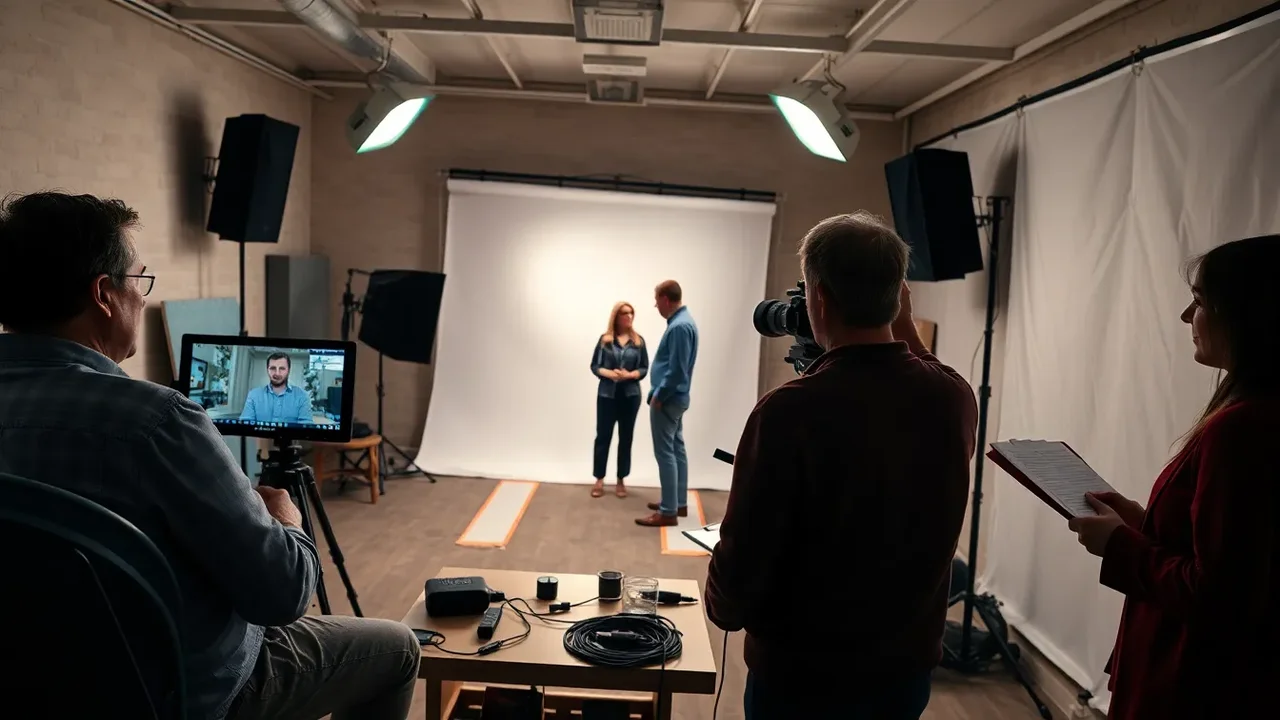
The first table read should be low-pressure. Actors sit, read, and listen. The director notes confusion, overlapping lines, and emotional gaps. Then move to a bare space with tape marks. Staging reveals whether the script works spatially.
| Rehearsal Phase | Focus | Duration |
|---|---|---|
| Table Read | Script logic, character intent | 2 hours |
| Blocking | Movement, spatial relationships | 3 hours |
| Scene Work | Emotional truth, adjustments | 4 hours |
| Technical | Camera, lighting, sound | 3 hours |
| Run-Through | Continuity, pacing | 2 hours |
Blocking for Camera
Unlike theater, film blocking serves the lens. Actors should hit marks naturally, but avoid robotic movement. Rehearse with a camera operator to understand framing. Use stand-ins for eyelines. A simple rule: move with intention, then hold still for the shot.
Improvisation and Emotional Truth
Improvisation can unlock subtext. Set a clear scenario and let actors explore beyond the lines. Record these sessions; sometimes a spontaneous gesture becomes the scene's climax. However, always return to the script to preserve structure.
Emotional Preparation
Actors need safe ways to access emotion repeatedly. Use sense memory, personal substitutions, or physical warm-ups. Avoid forcing tears; instead, rehearse the build-up and the release. For short films, emotional arcs must be efficient, so practice entering and exiting states quickly.
Technical Rehearsals
Technical rehearsals integrate camera, lighting, sound, and props. Actors should wear costumes and use real props. Walk through complex sequences: fights, falls, kisses, or stunts. The goal is repeatability. Mark camera positions, light cues, and sound playback.
Continuity and Coverage
Rehearse each scene from multiple angles. Actors must repeat actions identically for editing. Practice matching hand positions, prop placement, and emotional intensity. A script supervisor should note continuity errors during rehearsal, not on set.
Final Polish and Run-Throughs
Run the entire film without stopping. This reveals pacing issues. A short film should feel like a complete story, not a fragment. After the run-through, give notes only on the most important adjustments. Then do a second run-through with corrections.
Director-Actor Communication
Use active verbs, not adjectives. Instead of saying be sad, ask what are you hiding? Instead of be angrier, ask what are you fighting for? This keeps actors in action. Rehearse with the same language you will use on set.
Common Pitfalls
- Over-rehearsing: Performances become stale. Leave room for spontaneity.
- Ignoring camera: Theater habits can break framing. Practice with the lens.
- Rushing technical: Skipping tech leads to wasted set time.
- No safety plan: Intimacy and stunts require clear protocols.
Practical Schedule Example
For a 12-minute drama, try: Week 1 table read and beat work. Week 2 blocking and scene study. Week 3 camera and technical. Week 4 full runs and polish. Keep sessions under four hours. End each with a quick check-in.
FAQ - Rehearsal Techniques for Drama Short Films
How many rehearsals does a short film need?
For a 10-15 minute drama, plan 8-12 sessions across two to four weeks. Prioritize table read, blocking, scene work, technical rehearsal, and full run-throughs. Adjust based on cast availability and complexity.
Should actors memorize lines before the first rehearsal?
Yes, they should be off-book for table read or shortly after. Early memorization allows actors to focus on intentions rather than words. However, remain open to script adjustments during rehearsal.
How do you rehearse for camera when the set is not available?
Use a smartphone or DSLR in a rehearsal room. Tape marks for furniture and camera positions. Practice hitting marks, matching eyelines, and repeating actions. Review footage to catch continuity issues.
What is a technical rehearsal and why is it important?
A technical rehearsal integrates lighting, sound, camera, props, and costumes. It tests whether the planned shots and cues work in real time. It prevents costly delays on the shooting day and ensures actor safety.
Can improvisation replace scripted rehearsal?
No, improvisation is a tool, not a replacement. It can unlock subtext and spontaneous behavior, but the final performance must serve the script and edit. Always return to the written scene and integrate useful discoveries.
How do you rehearse emotional scenes without exhausting actors?
Rehearse the build-up and release rather than the peak emotion repeatedly. Use physical warm-ups, sense memory, and clear boundaries. Allow breaks. Save full emotional runs for final rehearsals and shooting.
Rehearsal techniques for drama short films include script analysis, beat breakdown, table reads, blocking for camera, improvisation, emotional preparation, technical integration, and full run-throughs. These methods help actors deliver truthful, repeatable performances under tight schedules while ensuring camera, sound, and continuity needs are met.
Mastering rehearsal techniques for drama short films transforms limited production time into focused, creative discovery. By planning table work, blocking, improvisation, technical integration, and run-throughs, filmmakers can capture authentic performances and cohesive visual storytelling within the constraints of the short format.