Understanding ZOV4 Shorts Without a Word
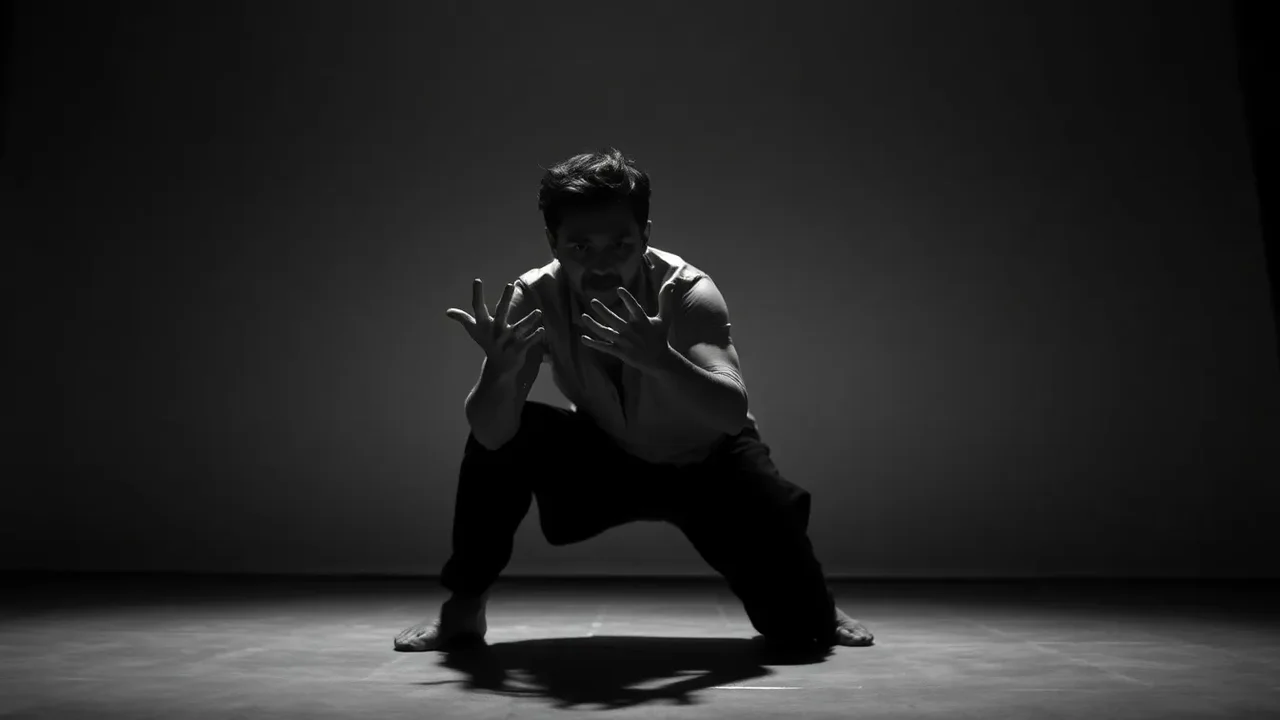
ZOV4 Shorts Without a Word is a collection of short films that rely entirely on physical acting. No dialogue, no voiceover, no subtitles. The performers must convey plot, character, and emotion through movement alone. This format demands a unique skill set. Actors cannot hide behind clever lines. They must build meaning from posture, gesture, and spatial relationships. The camera becomes a partner in this silent conversation. Every frame must carry narrative weight. The audience learns to read bodies as text. This is the essence of ZOV4.
Physical acting in ZOV4 requires rigorous preparation. Actors train their bodies like athletes. They practice balance, flexibility, and endurance. They study mime techniques but avoid clichés. They learn to create imaginary objects with precise hand shapes. They explore levels: low, medium, high. They map their kinesphere, the space around the body. They develop a neutral mask to strip away habitual expressions. Then they rebuild a vocabulary of intentional gestures. Each movement must have a clear beginning, middle, and end. This clarity allows the audience to follow the story without words.
The Role of the Face and Eyes
In silent performance, the face is a landscape. The eyes are the most powerful tool. A darting glance can show suspicion. A slow blink can reveal resignation. A wide stare can communicate shock. Actors must control micro-expressions without overacting. They practice in front of mirrors and cameras. They learn to let emotions arise from physical sensations. For example, clenching the jaw creates anger. Softening the knees creates vulnerability. The face then reflects these internal states naturally. ZOV4 shorts often use close-ups to capture these subtle shifts. The audience feels the emotion before they understand the plot.
Building a Silent Narrative Arc
Every ZOV4 short needs a clear story arc. Without dialogue, the arc must be physical. The actor establishes a want. They face an obstacle. They struggle. They transform. This arc can be shown through repeated actions with variations. For instance, a character tries to open a door three times. First with confidence, then with frustration, then with despair. The final attempt might succeed or fail, but the body tells the truth. Transitions between beats must be sharp. The actor uses breath to mark changes. Inhale before a decision. Exhale after a realization. The audience follows these physical punctuation marks.
Training Techniques for ZOV4 Performers
Training for ZOV4 shorts is systematic. Actors begin with isolation exercises. They move only the head, then only the shoulders, then only the hips. This builds body awareness. Next, they practice slow motion. Moving at half speed forces precision. Then they add resistance. Imaginary walls, heavy objects, and strong winds create physical truth. They also study animal movements. A cat, a snake, a bird. Each animal offers a different rhythm and posture. Finally, they improvise silent scenes with partners. The goal is to react truthfully without planning. This spontaneity keeps performances alive.
Table: Weekly Training Schedule for Silent Acting
| Day | Focus | Duration |
| Monday | Isolation and body awareness | Sixty minutes |
| Tuesday | Slow motion and precision | Forty-five minutes |
| Wednesday | Resistance and imaginary objects | Sixty minutes |
| Thursday | Animal studies and rhythm | Thirty minutes |
| Friday | Partner improvisation and reaction | Ninety minutes |
| Saturday | Neutral mask and micro-expressions | Forty-five minutes |
| Sunday | Rest and review footage | Thirty minutes |
List: Essential Drills for Physical Acting
- Mirror work: copy and contrast your own movements.
- Slow motion walking: take ten minutes to cross a room.
- Object pantomime: eat an apple, drink water, lift a box.
- Emotional recall through posture: slump for sadness, straighten for pride.
- Partner mirroring: follow without leading, then switch.
- Space mapping: touch all four walls with different body parts.
- Rhythm shifts: move to a metronome, then break the beat.
- Neutral mask: perform a simple task without facial expression.
Case Study: A ZOV4 Short in Practice
Consider a ZOV4 short titled 'The Last Key.' A woman enters an empty room. She searches for a key. She checks pockets, under a rug, inside a book. No words. Her movements grow frantic. She finds the key under a chair. She tries to unlock a door. The key breaks. She sinks to the floor. Then she notices a window. She opens it. Sunlight floods in. She climbs out. The story is simple but emotionally rich. The actress used breath, tempo, and weight to show hope, frustration, and release. The camera stayed close, capturing her eyes and hands.
Analyzing the Physical Beats
Each beat in 'The Last Key' is physical. Beat one: entry. The woman's shoulders are tense. Beat two: search. Her hands move in quick, sharp arcs. Beat three: discovery. She freezes, then collapses her spine. Beat four: failure. She drops the broken key and exhales. Beat five: new possibility. She lifts her head, turns, and rises. Beat six: escape. She moves with purpose and lightness. These beats are not written in dialogue. They are written in the body. Actors in ZOV4 must identify these beats before filming. They mark them in the script as physical actions. Then they rehearse each beat until it is automatic.
Common Mistakes in Silent Physical Acting
Many actors new to ZOV4 shorts make predictable mistakes. They overact. They use large, sweeping gestures that feel theatrical. They forget that film captures subtlety. They also move without intention. Every movement must have a reason. Another mistake is ignoring the face. Some actors focus only on limbs. But the face is part of the body. They may also rush beats. Silence needs time. The audience needs moments to read the body. Finally, they neglect the eyes. The eyes can tell the entire story if the actor trusts them. Avoiding these mistakes requires feedback and self-review.
List: Signs of Overacting in Silent Film
- Exaggerated facial expressions that reach the back row.
- Constant motion without pauses or stillness.
- Mouthing words even though no sound is needed.
- Broad gestures that break the reality of the scene.
- Emoting to the camera instead of reacting to the environment.
- Forcing tears or laughter instead of physical truth.
Directing ZOV4 Shorts Without Dialogue
Directing silent physical acting is different from directing dialogue. The director must think in images and rhythms. They cannot rely on script analysis of lines. Instead, they analyze movement scores. They work closely with actors to shape physical beats. They use playback to review subtle gestures. They adjust camera angles to highlight body language. They may ask actors to repeat a scene with different tempos. Fast, slow, staccato, fluid. Each tempo changes the meaning. The director also controls sound design. Even though there is no dialogue, music and ambient noise can support the physical story. Silence itself becomes a tool.
Table: Comparison of Dialogue vs. Physical Acting
| Aspect | Dialogue Acting | Physical Acting |
| Primary Tool | Voice and words | Body and movement |
| Script | Lines and cues | Beats and actions |
| Rehearsal | Line memorization | Muscle memory |
| Audience Focus | Ears and eyes | Eyes and empathy |
| Editing | Dialogue continuity | Movement continuity |
| Error Risk | Forgotten lines | Unclear intentions |
Practical Exercises for Actors and Directors
Here are practical exercises to develop ZOV4 skills. First, the 'three objects' exercise. An actor must use three imaginary objects in a row. Each object has a different weight and size. They must show the object clearly without words. Second, the 'emotion switch' exercise. The actor performs a simple task while switching emotions every ten seconds. The switch must be physical, not just facial. Third, the 'space chase' exercise. Two actors move through a room without touching. One leads, one follows. Then they switch. This builds spatial awareness and reaction. Fourth, the 'silent interview' exercise. One actor asks questions with their body. The other answers with their body. No words allowed. These exercises build the muscle of silent storytelling.
List: Warm-Up Routine for Silent Acting
- Neck rolls: slow, controlled, ten times each direction.
- Shoulder circles: forward and backward, twenty repetitions.
- Spine waves: from tailbone to crown, five cycles.
- Facial massage: jaw, cheeks, forehead, temples.
- Eye stretches: look up, down, left, right, then circle.
- Breath work: inhale four counts, hold four, exhale eight.
- Weight shifts: from left foot to right foot, fifty times.
- Vocal warm-up: hum softly to relax the throat, even in silence.
Camera and Editing for Silent Physical Acting
The camera is a silent actor's best friend and worst critic. It captures every micro-movement. Directors must choose shots that support physical storytelling. Wide shots show spatial relationships and full-body gestures. Medium shots reveal posture and weight shifts. Close-ups expose eyes, breath, and tiny facial changes. Editing must preserve the rhythm of physical beats. Jump cuts can destroy continuity of movement. Instead, editors use match cuts on action. They cut on a gesture's peak or a breath's release. This keeps the flow invisible. Sound design also matters. Footsteps, cloth rustle, and breathing can amplify silent performance. Music should support, not dominate. The goal is to let the body speak clearly.
List: Shot Types for Silent Scenes
- Extreme wide shot: establishes isolation and scale.
- Full shot: shows whole body and spatial context.
- Medium shot: captures torso, arms, and gestures.
- Close-up: focuses on face, eyes, and breath.
- Extreme close-up: reveals tiny details like trembling fingers.
- Over-the-shoulder: creates point of view and tension.
- Low angle: makes a character feel powerful or threatening.
- High angle: makes a character feel small or vulnerable.
Emotional Truth Through Physical Action
Emotional truth in ZOV4 shorts comes from physical action, not from trying to feel an emotion. Actors often make the mistake of waiting for inspiration. Instead, they should do something. The action creates the emotion. For example, if a character is grieving, the actor can carry a heavy imaginary weight. The body's strain produces sadness. If a character is joyful, the actor can skip lightly and let the chest expand. The emotion follows the movement. This is called acting from the outside in. It is highly effective for silent film because the audience sees the physical cause. They then feel the emotional effect. ZOV4 performers master this technique.
Table: Physical Actions and Their Emotional Effects
| Physical Action | Likely Emotion |
| Slumped shoulders, heavy steps | Sadness or defeat |
| Rapid, shallow breathing | Fear or anxiety |
| Open chest, lifted chin | Confidence or pride |
| Clenched fists, tight jaw | Anger or frustration |
| Light, bouncing gait | Joy or excitement |
| Slow, deliberate movements | Grief or contemplation |
| Frozen posture, wide eyes | Shock or surprise |
Breath, Rhythm, and Timing
Breath is the invisible engine of physical acting. In ZOV4 shorts, breath controls tempo. An actor can use quick breaths to show panic. Slow, deep breaths show calm or resolve. Holding breath creates suspense. Releasing breath creates relief. Rhythm is the pattern of movement over time. Actors must vary rhythm to avoid monotony. They can use syncopation, pauses, and accelerations. Timing is the precise moment of action. A gesture that is slightly early or late can change meaning. For example, a hand reaching out a second too late can show hesitation. A smile that arrives too quickly can seem false. Silent actors must internalize rhythm and timing until they are instinctive.
List: Breath Exercises for Silent Performance
- Four-count inhale, four-count hold, eight-count exhale.
- Alternate nostril breathing for focus and calm.
- Sharp exhale through mouth to simulate shock.
- Panting breath for fear or exhaustion.
- Deep belly breath to ground a character.
- Sighing exhale to show resignation.
- Holding breath for ten seconds to build tension.
- Laughing breath without sound to show joy.
Collaboration Between Actors and Crew
ZOV4 shorts require tight collaboration. Actors cannot work in isolation. They need directors, camera operators, and editors who understand physical storytelling. The director and actor must share a vocabulary of beats and actions. The camera operator must anticipate movement. They should not zoom or pan randomly. Instead, they move with the actor's rhythm. The editor must preserve the integrity of each gesture. They should not cut away too early. The sound designer must find the right ambient sounds. A creaking floorboard can add tension. A distant bird can add loneliness. The crew supports the silent performance without overpowering it.
List: Communication Tools for Silent Sets
- Hand signals for 'hold,' 'action,' and 'cut.'
- Color-coded tape marks for actor positions.
- Metronome or click track for rhythm consistency.
- Playback monitors for reviewing physical beats.
- Movement notation sheets for choreography.
- Daily physical warm-up together as a team.
- Post-scene debriefs focused on body language.
- Silent applause or gestures to respect the mood.
Advanced Physical Acting Techniques
Once the basics are mastered, ZOV4 actors explore advanced techniques. One is 'kinesphere expansion.' The actor imagines their body's reach extending far beyond the skin. This creates larger, more expressive movements without losing control. Another is 'tempo layering.' The actor performs different body parts at different speeds. The head moves slowly while the hands move quickly. This creates complexity and interest. A third technique is 'emotional memory in the muscles.' The actor recalls a past physical sensation, like the cold of winter or the sting of a slap. The body then produces authentic reactions. A fourth is 'negative space.' The actor shapes the empty air as if it were solid. This builds imaginary environments. These techniques require years of practice.
Table: Advanced Techniques and Their Purposes
| Technique | Purpose |
| Kinesphere expansion | Increase expressive range |
| Tempo layering | Create complexity and interest |
| Muscle emotional memory | Produce authentic reactions |
| Negative space shaping | Build imaginary environments |
| Weight transfer | Show intention and gravity |
| Isolation control | Focus attention on specific body parts |
ZOV4 Shorts: Case Studies and Examples
Let's examine three ZOV4 shorts to see physical acting in action. In 'The Waiting Room,' a man sits on a bench. He checks his watch. He taps his foot. He stands, sits, stands again. The only prop is a chair. His growing anxiety is shown through tempo and posture. In 'The Gift,' a woman receives a box. She opens it slowly. Her face shifts from curiosity to confusion to joy. She hugs the box. No words explain what is inside. The audience invents the meaning. In 'The Race,' two runners compete. One falls. The other stops, looks back, and returns. The choice is physical. The emotion is clear. These shorts prove that silence can be louder than speech.
List: Key Takeaways from ZOV4 Case Studies
- Simple props can carry deep emotional weight.
- Repeated actions with variation show change.
- The audience fills silence with their own meaning.
- Physical choices reveal character faster than dialogue.
- Stillness is as powerful as movement.
- Eye contact with the environment creates realism.
Building a Career in Silent Physical Acting
A career in ZOV4-style physical acting requires dedication. Actors should build a reel of silent scenes. They can create their own shorts with a smartphone. They should study classic silent films. Charlie Chaplin, Buster Keaton, and Jacques Tati are essential. They should also train in mime, dance, and martial arts. These disciplines build body control and spatial awareness. Networking is important. Attend film festivals, workshops, and improv classes. Collaborate with directors who value physical storytelling. Keep a journal of movements and emotions. Review your own footage critically. Seek feedback from trusted peers. Over time, you will develop a unique physical vocabulary.
List: Resources for Silent Acting Training
- Books: 'The Art of Mime' and 'Physical Acting' by various authors.
- Online courses: mime, clowning, and physical theater.
- Local workshops: commedia dell'arte and mask work.
- Film study: Buster Keaton, Charlie Chaplin, and modern silent shorts.
- Practice groups: improv troupes and movement collectives.
- Camera practice: record yourself daily and review.
- Bodywork: yoga, Pilates, and Alexander Technique.
- Festivals: submit to silent film and short film festivals.
Common Questions from New Performers
New performers often ask how to start. The answer is simple: start small. Choose a one-minute silent scene. Perform it for a friend. Record it. Watch it without sound. Notice what is clear and what is confusing. Adjust your body. Repeat. Another question is how to avoid feeling silly. The answer is to commit fully. Silly feelings come from half-hearted movement. When you commit, the body finds truth. A third question is how to remember sequences. Use muscle memory, not mental lists. Rehearse until the body knows the order. A fourth question is how to work with a director who does not understand silent acting. Educate them gently. Show them examples. Explain beats and physical actions. Collaboration improves with shared vocabulary.
List: Quick Tips for Silent Scene Study
- Read the scene as if it were a dance score.
- Identify the want, obstacle, and action in each beat.
- Mark the moment of change with a breath.
- Practice without props to rely on your body.
- Film from multiple angles to check clarity.
- Ask a friend to describe what they saw without words.
Continuous Development for Silent Actors
ZOV4 Shorts Without a Word represent a pure form of visual storytelling. They strip away the safety of dialogue and force actors to communicate with their entire being. This is challenging but deeply rewarding. The audience becomes an active participant, interpreting gestures and filling silences. For actors, this work builds unmatched presence and control. For directors, it demands visual intelligence and rhythm. For viewers, it offers a universal language that crosses cultures. Whether you are creating your own silent short or studying the masters, physical acting is a lifelong practice. Start today. Use your body. Tell a story without a single word.
Additional Practice: The 30-Second Silent Story
One of the best exercises for ZOV4 actors is the 30-second silent story. Set a timer. Choose a simple objective. For example, 'find a lost coin.' You have thirty seconds to tell the story using only your body. No words, no props. You must establish character, location, and conflict. You must have a beginning, middle, and end. You must use at least three distinct physical actions. After thirty seconds, stop. Review your performance. Did the story make sense? Could a viewer describe what happened? If not, simplify. Reduce the story to its physical core. Repeat the exercise daily. Over time, your ability to compress narrative into movement will grow. This skill is essential for ZOV4 shorts.
Remember: silence is not empty. It is full of physical truth. Every gesture matters. Every breath counts. Practice daily. Stay present. Begin. Always. Keep going.
FAQ - Physical Acting: ZOV4 Shorts Without a Word
What is ZOV4 Shorts Without a Word?
It is a collection of short films that use no dialogue or voiceover, relying entirely on physical acting, gestures, and movement to tell stories.
Do actors in ZOV4 shorts need special training?
Yes, they need training in mime, body awareness, breath control, rhythm, and emotional expression through physical action.
How do directors guide actors without dialogue?
Directors use movement scores, physical beats, tempo adjustments, and camera framing to shape silent performances.
Can silent physical acting work in modern film?
Absolutely. Silent physical acting is used in many modern shorts, commercials, and feature films to create universal emotional impact.
What are common mistakes in silent acting?
Overacting, unnecessary motion, ignoring facial expressions, rushing beats, and neglecting eye contact are common mistakes.
How can I start practicing physical acting?
Start with simple exercises like slow motion walking, object pantomime, and 30-second silent stories. Record yourself and review.
Physical acting in ZOV4 Shorts Without a Word uses gesture, posture, breath, and rhythm to tell stories without dialogue. Actors train in mime, emotional truth, and spatial awareness. Directors use camera and editing to support silent beats. This universal art form creates powerful visual narratives that rely entirely on the body.
Physical acting in ZOV4 Shorts Without a Word proves that silence can be a powerful storytelling tool. By mastering gesture, breath, and intention, actors create vivid narratives that transcend language. This art form demands dedication but rewards performers with deep presence and audiences with unforgettable visual experiences.