Understanding Heavy Dialogue
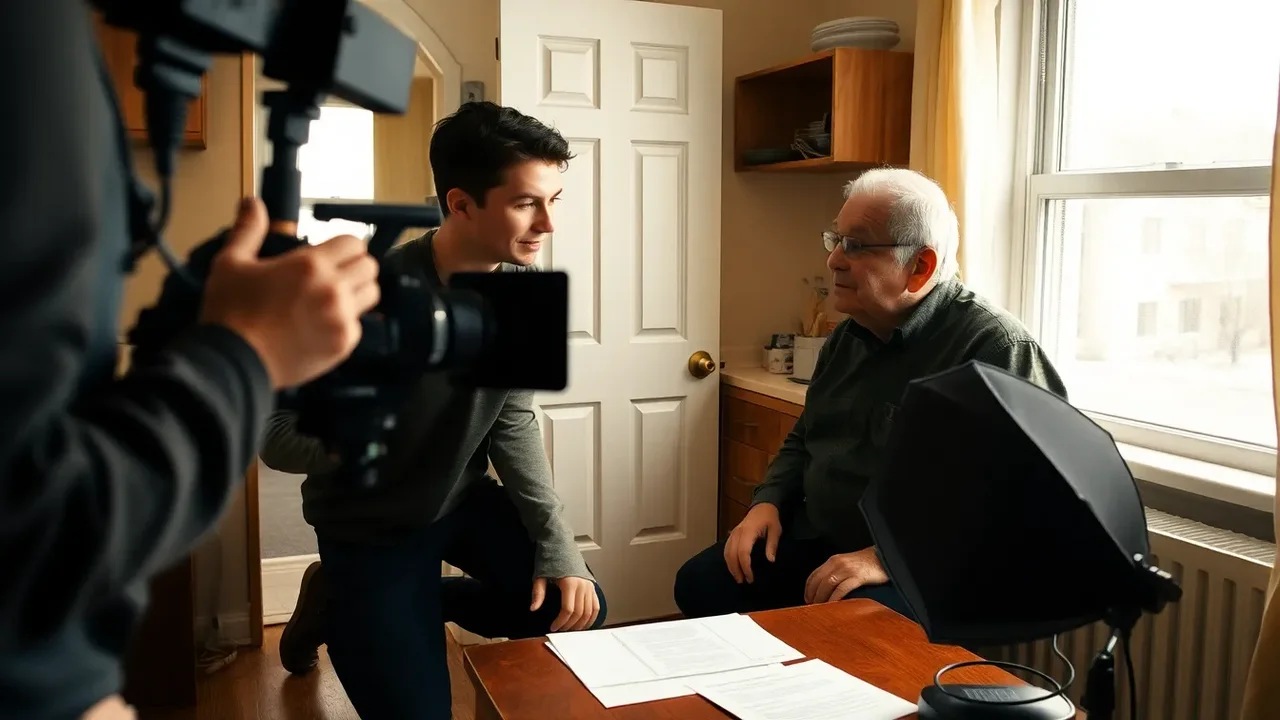
Heavy dialogue is any scene in which characters speak for an extended period without significant physical action. It can be a courtroom monologue, a marital argument, a political debate, a confession, or a philosophical exchange. Actors often find heavy dialogue intimidating because it demands sustained concentration, emotional variety, and precise listening. The director's job is not to make actors memorize faster but to create conditions where language becomes behavior. When actors treat text as a series of objectives, heavy dialogue transforms from a memory test into a dynamic exchange.
Why Heavy Dialogue Feels Different
Unlike action scenes, heavy dialogue offers no external movement to hide behind. The actor cannot rely on a prop, a fight, or a chase to generate energy. Every pause, glance, and breath becomes visible. This intensity can be thrilling, but it can also paralyze performers who feel exposed. Directors must acknowledge this pressure and normalize it. A simple statement such as 'This scene is hard because it is pure language, and that is exactly why it matters' can validate the actor's experience and reduce anxiety.
The Director as Language Coach
When guiding actors through dense text, the director becomes part language coach, part psychologist, and part editor. You must help actors understand the architecture of the scene, the rhythm of the sentences, and the emotional stakes behind each clause. You also need to protect them from over-intellectualizing. The goal is not to explain every word but to unlock the impulse that makes the words necessary. Ask actors to paraphrase the text in their own words, then return to the original language with fresh ownership.
Preparation Before Rehearsal
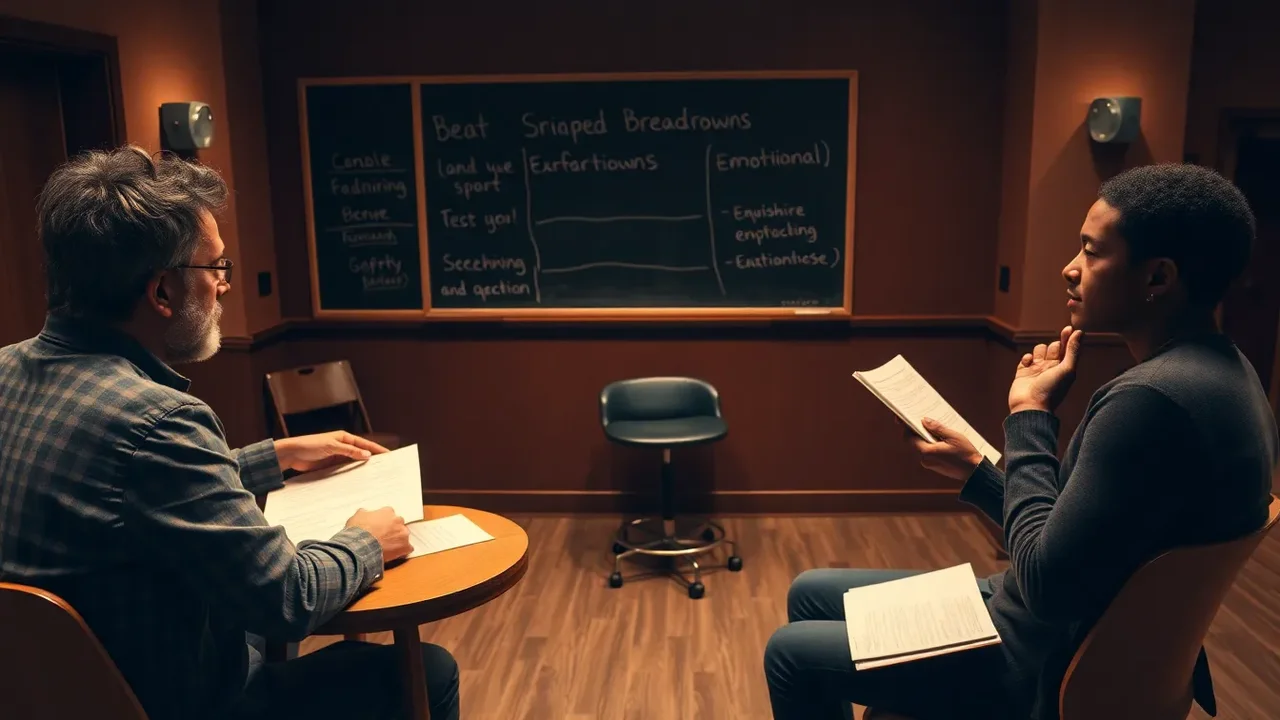
Preparation is the foundation of successful heavy dialogue. Before actors arrive, the director should map the scene's beats, transitions, and emotional turns. This map is not a straitjacket; it is a shared reference point. Mark the script with objectives, obstacles, and tactics. Identify where the character is winning, losing, or pretending. When actors see that you have done this work, they trust that the rehearsal has direction.
Breaking Down the Text
Divide long speeches into units of action. A unit is a small section of text tied to a single objective. For example, a character may begin by flattering, then shift to accusing, then retreat into self-pity. Each shift is a new unit. Actors can play these units as tactics in a game. This approach prevents monotony and gives the performer specific things to do with each sentence. It also makes memorization easier because the lines are attached to intentions rather than mere words.
Creating a Shared Vocabulary
Develop a rehearsal vocabulary that everyone understands. Terms such as beat, tactic, obstacle, stakes, and listening should mean the same thing to you and the actors. Avoid vague notes like 'be more intense' or 'make it bigger.' Instead, say 'You are trying to shame him into staying' or 'You are hiding the fact that you already know.' Specific language produces specific behavior. When actors hear precise notes, they can adjust without guessing.
Rehearsal Strategies for Dense Text
The first rehearsals of heavy dialogue should not be about performance. They should be about discovery. Sit around a table and read the scene slowly. Stop frequently to ask questions. What does this word mean to the character? Why does she choose this story now? What is she afraid will happen if she stops talking? These questions build a rich inner life that will eventually support the text.
Table Work That Works
Table work can become tedious if it turns into a literature seminar. Keep it active. Ask actors to read only their own lines, then only the other character's lines, then both. Have them read while standing, walking, or facing away from each other. Change the physical circumstance to reveal new meanings. For instance, have them read the scene as if they are late for a train. The urgency will expose which lines are essential and which are habitual.
Using Repetition Without Boredom
Heavy dialogue requires repetition, but repetition can kill spontaneity. To keep it alive, vary the repetition. Run the scene at half speed, then double speed. Run it with no pauses, then with exaggerated pauses. Run it while maintaining eye contact, then while pacing. Each variation teaches the actor something different about the text. The goal is not to find one perfect version but to make the actor flexible enough to respond truthfully in the moment.
Listening as the Primary Skill
In heavy dialogue, listening is more important than speaking. Actors must hear the other character's lines as if for the first time. They must allow those lines to change them. Directors can train this by having actors respond before the other person finishes, then by having them wait three seconds after the other person finishes. The contrast reveals how listening shapes timing. When actors truly listen, the text stops being a recitation and becomes a conversation.
Managing Memorization and Line Load
Actors carrying long speeches often worry about forgetting lines. That fear can make them rush, mumble, or disconnect. Directors can reduce anxiety by separating memorization from performance. Encourage actors to learn lines in small chunks, while walking, while doing chores, or while speaking to a mirror. The goal is to make the lines automatic so that the actor's mind is free to pursue objectives.
Chunking and Linking
Teach actors to chunk speeches into logical sections. Each chunk should end with a strong image or a shift in thought. Link chunks together by remembering the last word of one and the first word of the next. This technique creates a mental chain that is more reliable than memorizing a wall of text. It also helps actors recover if they lose their place, because they can jump to the next chunk instead of panicking.
Line Readings and Intentions
Line readings are dangerous when they impose a single interpretation. Instead of saying 'say it sadly,' ask 'what are you trying to make him feel?' The actor's intention will naturally color the line. If the line still feels flat, explore the obstacle. What is preventing the character from getting what she wants? The obstacle creates tension, and tension creates variety. Remember that heavy dialogue is not about beautiful speaking; it is about urgent wanting.
Directing Emotional Shifts
Long speeches often contain multiple emotional shifts. A character may move from anger to grief to manipulation to surrender. If the actor plays only one emotion, the scene becomes monotonous. Directors can help by identifying the exact moment of each shift. Mark the script with arrows, colors, or symbols. Then rehearse the transitions separately. Practice moving from one emotion to the next without stopping, as if changing gears in a car.
The Power of the Pause
Pauses are punctuation in heavy dialogue. They can signal thought, resistance, fear, or power. A well-placed pause can be more dramatic than a shouted line. However, actors often fear silence. They fill it with movement or noise. Directors should give actors permission to pause. Try an exercise where the actor must count to three silently before every major line. The resulting tension will often reveal the scene's true stakes.
Physicalizing the Text
Even in a seated dialogue scene, the body must be engaged. The actor's physical life can reveal what the words conceal. A clenched fist, a tapping foot, a sudden stillness, or a shift in breath can add layers to the text. Directors can suggest a simple physical action for each beat: pouring water, folding paper, adjusting a cuff. These actions give the actor something to do and prevent the scene from becoming static.
Working with Different Actor Temperaments
Actors approach heavy dialogue differently. Some love language and dive into the text. Others feel trapped by it and need physical activity. Some need extensive intellectual analysis. Others need to jump in and discover through doing. The director must adapt. A single approach will not work for every actor. Observe how each performer learns, and tailor your guidance accordingly.
The Analytical Actor
Analytical actors want to understand every nuance. They may ask about historical context, psychological motivation, and thematic meaning. Give them enough information to feel secure, but set boundaries. Too much analysis can paralyze instinct. Suggest a time limit for discussion, then move to an improvisation. Let the body and voice teach what the mind cannot solve.
The Intuitive Actor
Intuitive actors may resist detailed breakdowns. They prefer to feel their way through the scene. With these actors, use active verbs and sensory images. Instead of explaining the subtext, ask 'What does the air in the room taste like?' or 'Where do you feel the pressure in your chest?' These prompts bypass the intellect and access the emotional truth. Then return to the text and let the language ride on that truth.
The Resistant Actor
Sometimes an actor resists heavy dialogue because they are bored, scared, or confused. Resistance is information. It may mean the stakes are unclear, the objective is weak, or the character's logic is missing. Do not fight the resistance. Investigate it. Ask 'What part of this scene makes you want to run away?' The answer often points directly to the work that needs to be done.
Practical Exercises for Heavy Dialogue
Exercises can break habits and reveal new possibilities. They should be playful, not punishing. Choose exercises that match the specific challenge of the scene. If the scene is about power, use an exercise that shifts power dynamics. If the scene is about intimacy, use an exercise that builds trust. Always debrief after the exercise. Ask what the actor discovered, not what they did right or wrong.
- Objective Swap: Actors play the scene with a different objective than the one written. For example, one actor tries to end the conversation while the other tries to prolong it. This reveals how objectives drive language.
- Subtext Improv: Actors speak the lines while silently thinking a completely different thought. The contrast often exposes hidden layers.
- No Words: Actors play the scene using only gestures, breaths, and eye contact. Then they add the text back. This reminds them that dialogue is only one part of communication.
- Speed Run: Actors perform the scene as fast as possible without dropping lines. This exposes unnecessary pauses and helps them find the spine of the scene.
- Slow Motion: Actors perform the scene at half speed, savoring every word. This reveals the weight of individual phrases.
- One Line at a Time: Actors alternate lines with a physical action between each one. This prevents the text from becoming a single block.
Using a Table to Diagnose Common Problems
The following table can help directors quickly identify common issues in heavy dialogue and match them with effective strategies. Use it as a rehearsal tool, not a rigid formula. Every actor and every scene will require a unique combination of approaches.
| Problem | Likely Cause | Director Strategy | Example Note |
|---|---|---|---|
| Actor rushes lines | Fear of forgetting or discomfort with silence | Add intentional pauses and slow-motion runs | Try counting to three before your next line. |
| Actor sounds monotone | Single objective or unclear emotional shifts | Break speech into beats with different tactics | You are flattering here, then accusing here. |
| Actor seems disconnected | Not listening or lacking stakes | Focus on the other person and raise the stakes | What happens if you fail to convince him? |
| Actor over-acts | Pushing emotion instead of pursuing action | Redirect to a simple physical task | Fold this paper while you speak. |
| Actor forgets lines | Memorization without meaning | Chunk text and link to objectives | What do you want in this section? |
| Actor is bored | No discovery or play | Introduce improvisation and variation | Play the scene as if you are late. |
Creating a Safe Rehearsal Environment
Heavy dialogue exposes vulnerability. Actors may feel foolish, lost, or emotionally raw. The director must create a space where mistakes are acceptable and experimentation is encouraged. Avoid sarcasm, public criticism, or impatient sighs. When an actor struggles, respond with curiosity rather than disappointment. Say 'That was interesting; let's try another way' instead of 'That wasn't right.' Safety does not mean avoiding challenge; it means challenging without humiliation.
Building Trust Through Consistency
Trust grows when the director is consistent. Start and end rehearsals on time. Follow through on promises. Give notes that are specific and actionable. Listen to actors' concerns without becoming defensive. When actors trust you, they will take greater risks. They will try the pause, the whisper, the ugly cry, or the dangerous silence. Heavy dialogue demands risk, and risk requires trust.
Handling Emotional Fatigue
Scenes with intense dialogue can be emotionally draining. Monitor the actors' energy. Offer breaks. Encourage hydration and stretching. Do not rehearse the most traumatic beat repeatedly without a clear purpose. If an actor becomes overwhelmed, shift to a lighter exercise or work on a different section. The goal is to build endurance, not to exhaust the performer.
Integrating Blocking and Movement
Blocking in a dialogue-heavy scene should serve the text, not distract from it. Movement can clarify relationships, power shifts, and emotional transitions. A character who stands while the other sits may dominate the scene. A character who turns away may be hiding. A character who moves closer may be threatening or pleading. Use movement sparingly and purposefully. Every gesture should have a reason.
Stillness as a Choice
Sometimes the most powerful blocking is no movement at all. Stillness forces the audience to focus on the face, the voice, and the unspoken thought. Teach actors that stillness is not passivity. It is active waiting. It is the calm before a storm. When an actor can hold still and remain compelling, they have mastered a difficult skill.
Using Props and Set
Props can be anchors for heavy dialogue. A cup of tea, a cigarette, a letter, or a phone can give the actor a reason to pause, think, or avoid eye contact. But props can also become crutches. If an actor hides behind a prop, take it away. If they need it to find truth, keep it. The set should support the scene's reality, not compete with the language.
Directing the Climax of a Dialogue Scene
Most heavy dialogue scenes build toward a climax. It may be a confession, a decision, a betrayal, or a moment of silence. The director must shape the build carefully. If the scene peaks too early, the rest feels flat. If it never peaks, the audience feels cheated. Map the rising tension. Identify the moment of no return. Rehearse the climax separately, then integrate it back into the whole.
The Moment of Change
Every scene should contain a moment of change. Something must be different at the end than at the beginning. The characters may not solve their problem, but they cannot remain the same. Help actors locate that moment. Ask 'What do you know now that you didn't know before?' or 'What can you no longer pretend?' The answer will give the scene a destination.
Ending with Resonance
The final lines of a heavy dialogue scene often linger. They should not be rushed. Allow the last words to land. Give the actors permission to stay in the moment after the scene ends. Sometimes the most powerful ending is a look, a breath, or a step away. The director's job is to protect that final beat from being trampled by the next scene.
Collaborating with Writers and Editors
Sometimes heavy dialogue needs adjustment. Lines may be repetitive, unclear, or unnecessary. As a director, you can collaborate with the writer to trim or reshape the text. But be careful. Do not cut lines simply because they are difficult. Difficult lines often contain the scene's greatest treasures. Cut only when the text is redundant or when it prevents the actor from playing an action.
Respecting the Language
Heavy dialogue is often written with a specific rhythm and vocabulary. Respect the writer's voice. Do not paraphrase casually. If a line feels unnatural, explore why. Maybe the character is supposed to sound formal. Maybe the formality is a mask. The director and actor should serve the text, not tame it.
Knowing When to Cut
If a speech goes on too long without new information or emotional movement, consider trimming. But make cuts with the writer's involvement. Test cuts in rehearsal. Sometimes a shorter version reveals the scene's core. Other times, the length is the point. A character who talks too much may be revealing their desperation. Do not cut the desperation just to save time.
Final Rehearsals and Performance
In final rehearsals, shift from exploration to consistency. The actors need to know they can reproduce the scene reliably. Run the full scene without stopping. Give notes only after the run. Focus on clarity, pace, and emotional truth. Avoid introducing new ideas that could destabilize the actor. The goal is to make the scene feel inevitable.
Maintaining Freshness
Heavy dialogue can become stale after many repetitions. To keep it fresh, encourage actors to listen anew each time. Remind them that the other character is unpredictable. Suggest small adjustments: a different breath, a new pause, a shifted focus. These tiny changes can reignite spontaneity without disrupting the scene's structure.
Notes That Empower
Give notes that are specific, positive, and actionable. Instead of 'It was too slow,' say 'Pick up the pace after the accusation.' Instead of 'I didn't believe you,' say 'Find the moment where you almost tell the truth, then stop.' When actors feel empowered, they can make adjustments themselves. The director's voice should be a guide, not a judge.
Conclusion Within the Guide
Guiding actors through heavy dialogue is a craft of patience, precision, and collaboration. It requires you to understand the text deeply, to read the actor's needs, and to create a space where language becomes alive. When done well, heavy dialogue stops being a burden and becomes a gift. The actors discover new depths, the audience leans in, and the scene resonates long after the words are spoken.
FAQ - How to Guide Actors Through Heavy Dialogue
How do I help actors memorize long passages of dialogue?
Break the text into small chunks tied to objectives, use linking techniques between chunks, and separate memorization from performance. Encourage actors to rehearse while walking or doing simple tasks so the lines become automatic and their minds remain free to pursue intentions.
What should I do when an actor rushes through heavy dialogue?
Rushing usually comes from fear of silence or forgetting. Add intentional pauses, run the scene in slow motion, and reassure the actor that silence is allowed. Focus on the other character and the stakes rather than on getting to the end of the speech.
How can I keep a long dialogue scene from becoming monotonous?
Map the emotional shifts and break the scene into beats with different tactics. Use exercises like objective swaps, subtext improv, and speed runs. Vary the physical life and ensure the actor is pursuing a specific action in each section.
Should I give line readings to actors in heavy dialogue?
Avoid line readings that impose a single interpretation. Instead, ask what the character is trying to make the other person feel or do. Specific intentions and obstacles will naturally color the line and keep the performance alive.
How do I handle an actor who feels overwhelmed by dense text?
Create a safe environment, validate the difficulty, and reduce the pressure by separating analysis from performance. Use chunking, physical tasks, and frequent breaks. Focus on one beat at a time and celebrate small discoveries.
When should I cut or adjust heavy dialogue?
Only cut when the text is redundant or prevents the actor from playing an action. Collaborate with the writer, test cuts in rehearsal, and respect the original language. Sometimes length itself is meaningful, so trim carefully and purposefully.
Guide actors through heavy dialogue by breaking text into beats, clarifying objectives, encouraging active listening, and creating a safe rehearsal space. Use chunking for memorization, vary repetition, and shape emotional shifts. Specific notes, purposeful pauses, and trust help actors turn dense language into truthful, dynamic performance.
Guiding actors through heavy dialogue is ultimately an act of service: to the text, to the performer, and to the audience. By preparing thoroughly, creating a safe rehearsal space, breaking down language into actionable beats, and listening as carefully as you ask your actors to listen, you can turn dense speeches into living, breathing moments of theater. The work is demanding, but the reward is a scene that feels both inevitable and alive.