Understanding the Personal Drama Short
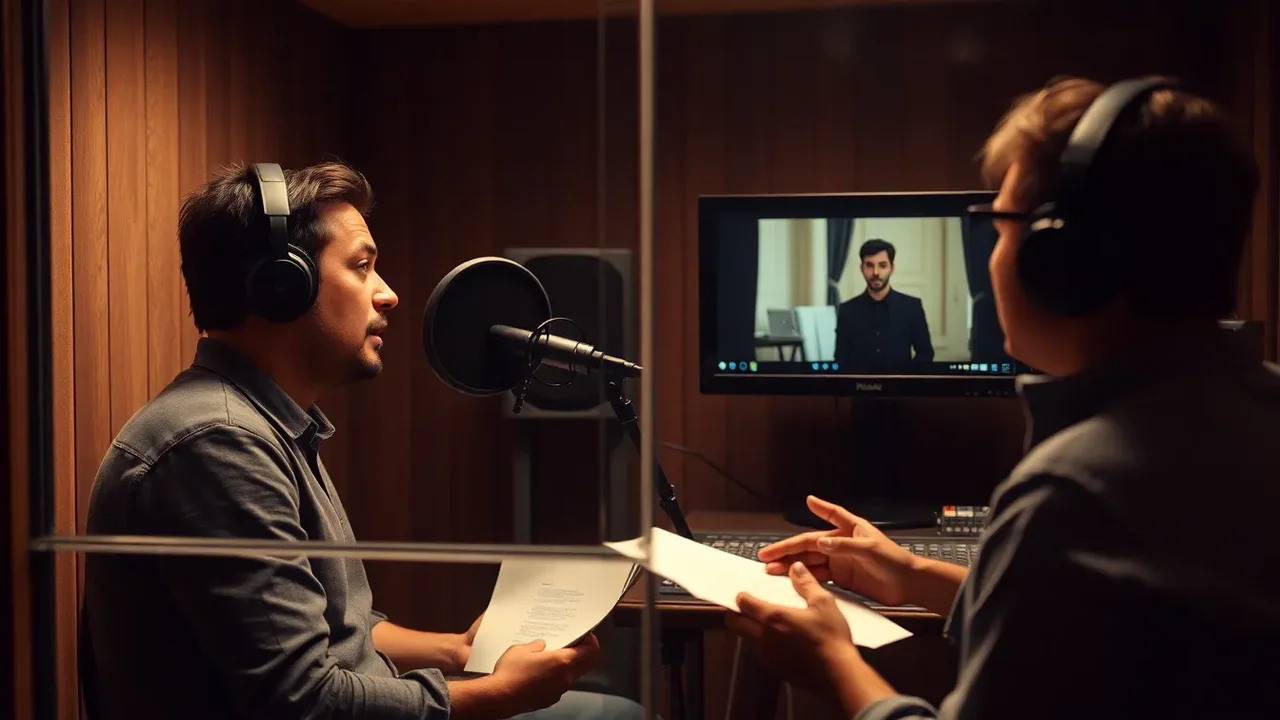
Personal drama shorts are intimate cinematic stories that prioritize character interiority over plot mechanics. They often run under fifteen minutes and rely on a single emotional arc. The voiceover can be the audience's guide into that interior world. Directing voiceover for this format requires a delicate balance between naturalism and theatrical clarity. You are not making a documentary narration or a commercial voiceover. You are shaping a confessional, a memory, a letter, or a diary entry. The voice must feel like it belongs to a specific person in a specific moment. That means every breath, pause, and inflection carries meaning. The director's job is to protect that intimacy while ensuring the story remains legible.
Why Voiceover Works in Short Drama
Short films have limited time to establish backstory. Voiceover can compress exposition without feeling like a data dump if it is performed with emotional truth. It can also create irony, contradiction, and subtext when the words disagree with the images. In personal drama, voiceover often represents the protagonist's present-tense reflection on past events. The voice may be wiser, sadder, or more angry than the character on screen. Directing that gap is the central creative challenge. You must decide whether the voiceover is synchronous, retrospective, or fantastical. Each choice changes how the actor should pitch, pace, and place the voice.
Pre-Production: Script Analysis and Emotional Mapping
Before you record a single line, analyze the script for emotional beats. Create a map that tracks what the voiceover knows, when it knows it, and how it feels about that knowledge. Mark shifts in tense, address, and tone. Is the narrator speaking to themselves, to another character, to the audience, or to an absent loved one? The answer determines the actor's focus. If the narrator is speaking to a dead parent, the voice may be softer, more pleading, or more guarded. If speaking to a younger self, it may be protective or accusatory. Write these intentions in the margins. Then translate them into playable directions, not adjectives.
Building a Backstory for the Voice
Voiceover actors need more than lines. They need a life. Prepare a one-page backstory for the narrator: age, region, class, education, current circumstances, and the event that triggered this reflection. Include sensory details: the smell of the room, the temperature, the time of day. These details give the actor something to react to. When directing, you can reference these images to adjust performance without saying 'be sadder.' For example, 'You are remembering the kitchen after the funeral. The coffee has gone cold. Say the line to the cup.' That kind of direction produces specific, grounded emotion.
Casting the Voice
Casting voiceover for personal drama is not about finding a beautiful voice. It is about finding a voice that can carry vulnerability, contradiction, and silence. Listen for actors who can make you forget the microphone. They should be able to whisper without losing clarity and to cry without becoming unintelligible. Consider age, accent, and texture. A slightly raspy voice may suggest a life of smoking or shouting. A clear, youthful voice may create dissonance with a character who has suffered. Audition with scenes that require shifts in emotion, not just monologues. Give them a direction and see how they adjust. The best voice actors are responsive, not just talented.
In-Person vs Remote Direction
Remote recording has become standard, but it changes the director's toolkit. You cannot read the room as easily. You must rely on verbal imagery, real-time feedback, and trust. Set up a clean audio connection and use a separate phone line or chat for direction. Ask the actor to record a short test. Listen for room tone, plosives, and mouth noise. In person, you can use physical proximity, touch, and eye contact to shape performance. You can also model breaths and pauses. Remote sessions benefit from longer warm-ups and more frequent check-ins. Neither method is superior, but each requires different preparation.
Directing Performance: Tone, Pace, and Pause
Tone is the emotional color of the voice. Pace is the speed of delivery. Pause is the space between words. In personal drama voiceover, pause is often more important than tone. A well-placed silence can reveal doubt, grief, or realization. Direct the actor to treat pauses as active choices, not empty gaps. Ask them to fill the pause with a thought. For example, 'In that pause, you are deciding whether to tell the truth.' Pace should vary with emotional stakes. When the narrator is anxious, the pace may quicken and then catch. When they are resigned, the pace may slow and flatten. Avoid monotony. Map the pace changes on your script.
Breath as Punctuation
Breath is the voiceover actor's punctuation. A sharp inhale can signal fear. A long exhale can signal relief or defeat. A held breath can create suspense. Direct the actor to use breath intentionally, but not theatrically. In intimate drama, breath should be audible but not distracting. Ask them to breathe from the belly, not the throat. If a line requires exhaustion, have them do a few jumping jacks before recording. If a line requires calm, have them sit still and breathe slowly. You can also edit breaths in post, but it is better to capture them naturally. Natural breath keeps the performance alive.
Language of Direction
Adjectives like 'sad' or 'angry' are vague and often lead to clichés. Use verbs, images, and actions instead. 'Confess,' 'plead,' 'admit,' 'mock,' 'soothe,' 'warn,' 'remember.' Give the actor a physical action: 'Say this while tying your shoe.' 'Say this while looking out a window.' 'Say this while holding a photograph.' The body influences the voice. Also use sensory images: 'The room smells like rain.' 'Your hands are shaking.' 'You can hear a train in the distance.' These images create involuntary changes in breath, pace, and tone. Your job is to be a poet of circumstance, not a judge of emotion.
Working with Subtext
Subtext is what the character means but does not say. In personal drama, voiceover often carries the subtext that the visuals cannot. If the line is 'I am fine,' the subtext might be 'I am falling apart.' Direct the actor to play the subtext, not the literal words. Ask: 'What are you protecting?' 'What are you afraid will happen if you tell the truth?' 'Who are you trying to convince?' The answers will change the delivery. Sometimes the most powerful choice is to underplay. A flat, quiet line can be more devastating than a tearful one. Trust the audience to hear the gap.
Technical Considerations for Intimate Voiceover
Personal drama voiceover often requires a close, warm, intimate sound. Use a large-diaphragm condenser microphone with a pop filter. Place it slightly off-axis to reduce plosives. Keep a consistent distance of six to eight inches. If the actor moves, the tone will change. Use a boom arm and ask them to stay still. Record in a treated room or a makeshift vocal booth with blankets. Avoid rooms with hard floors and bare walls. Capture room tone for at least thirty seconds. Record at 48 kHz and 24-bit. Monitor with closed-back headphones to avoid bleed. Keep levels around -12 dB to -6 dB. Never clip.
Microphone Technique for Emotion
Proximity effect can be your friend. When the actor gets closer to the mic, the voice becomes warmer and more intimate. When they pull back, it becomes more distant and reflective. You can direct this physically: 'On this line, lean in as if telling a secret.' 'On this line, pull back as if remembering from a distance.' Be careful not to create inconsistent levels. Use a compressor lightly during recording or in post. Also watch for sibilance and mouth clicks. Ask the actor to stay hydrated and avoid dairy. A little apple juice can reduce mouth noise. These small technical details protect the emotional performance.
Table: Emotional Beats and Voice Direction
| Emotional Beat | Voice Direction | Technical Note |
|---|---|---|
| Confession | Lean in, lower volume, slower pace | Use proximity effect, reduce high frequencies |
| Realization | Pause before key word, then soften | Capture breath, avoid clipping on inhale |
| Anger | Increase pace, tighten jaw, push consonants | Watch for distortion, use pop filter |
| Grief | Break breath, let voice crack, do not clean | Keep room tone, allow silence |
| Resignation | Flatten pitch, slow tempo, drop volume | Increase gain slightly, avoid noise floor |
Synchronization with Visuals
Voiceover does not exist in a vacuum. It must interact with the image. Sometimes the voiceover should lead the image, creating anticipation. Sometimes it should follow, creating commentary. Sometimes it should contradict, creating irony. Watch the cut with the voiceover and note where the voice lands. If a line lands on a cut, it can feel too neat. If it lands slightly before or after, it can feel more natural. Direct the actor with the visual in mind: 'On this line, you are looking at her hands.' 'On this line, you look away.' You can also record alternate takes for different sync points. In the edit, you can slide the audio a few frames to find the right emotional alignment.
Music and Sound Design Interplay
Voiceover in personal drama often competes with music and sound design. You must carve out frequency space for the voice. Ask the composer to leave the midrange open. Use sidechain compression or automation to duck music under key lines. But do not over-duck. Sometimes the voice should be buried slightly, as if it is a memory. Use reverb to place the voice in a space. A dry voice feels present and confrontational. A reverberant voice feels distant and nostalgic. You can also use sound design to trigger voice changes. A door slam might cause the actor to pause. A phone ring might cause them to rush. Direct the voiceover with these sonic events in mind.
Directing Remotely: Practical Workflow
Remote voiceover sessions require a clear workflow. Send the script and character notes at least a day in advance. Ask the actor to warm up and record a test. Use a video call so you can see their face. Use a separate audio channel for direction. Record the session in your DAW. Take notes with timecodes. After each take, give one or two specific notes. Avoid overwhelming the actor. If they are struggling, change the image or action, not the adjective. Ask them to do a silly take to release tension. Then return to the scene. Save all takes, including mistakes. Sometimes a mistake is the most honest moment.
In-Person Session Setup
In person, create a comfortable, private space. Dim the lights. Remove distractions. Have water and tissues available. Sit where the actor can see you but not the microphone. Use a clipboard for notes. Start with a relaxed conversation. Then move to the script. Read the lines aloud yourself to set a tempo. Ask the actor to read without acting. Then add one intention at a time. Record multiple takes. Do not stop after a good take. Try a different approach. You might discover something better. After the session, back up the files immediately. Label them clearly. Keep a spreadsheet of takes and notes.
List: Practical Steps for Directing Voiceover
- Analyze the script: Map emotional beats, tense, and address.
- Build a backstory: Create sensory details for the narrator.
- Cast for vulnerability: Prioritize responsiveness over vocal beauty.
- Warm up the actor: Use breathing and physical exercises.
- Direct with verbs: Replace adjectives with actions and images.
- Record multiple takes: Capture variations in pace, tone, and pause.
- Protect the silence: Treat pauses as active choices.
- Capture room tone: Record at least thirty seconds of ambient sound.
- Monitor technically: Watch levels, plosives, and mouth noise.
- Edit with emotion: Choose takes that serve the story, not perfection.
Editing and Comping the Voiceover
Editing voiceover for personal drama is not about making it perfect. It is about making it true. Comping is the process of assembling the best parts of multiple takes. You might use one take for the opening, another for the middle, and a third for the end. Listen for emotional continuity, not just technical cleanliness. Sometimes a breath or a crack in the voice is more valuable than a smooth line. Use crossfades to hide edits. Remove clicks and mouth noise manually. But do not remove all humanity. If a line is too quiet, automate the gain rather than compressing heavily. If a line is too loud, ride the fader. Keep the voice consistent in tone and distance.
Using Reverb and EQ
EQ can help the voice sit in the mix. High-pass filter at 80 Hz to remove rumble. Cut muddy frequencies around 200-400 Hz if the voice sounds boxy. Boost presence around 3-5 kHz if the voice is dull. But be gentle. Personal drama voiceover should not sound like a commercial. Reverb should match the visual space. If the character is in a small room, use a short room reverb. If they are remembering a vast landscape, use a longer reverb. Automate reverb to change with the emotional beat. A dry voice can feel exposed. A wet voice can feel lost in memory. Use these effects intentionally.
Common Mistakes in Directing Voiceover
One common mistake is over-directing. Giving too many notes can make the actor self-conscious. Another is under-directing. Assuming the actor knows the emotional arc can lead to generic readings. A third mistake is ignoring the body. Voiceover is physical. If the actor is tense, the voice will be tense. A fourth mistake is recording in a poor acoustic environment. No amount of editing can fix a boxy, noisy room. A fifth mistake is treating voiceover as post-production afterthought. It should be integrated from the script stage. A sixth mistake is falling in love with a technically perfect take that lacks soul. Always ask: does this serve the story?
Ethical Considerations
Personal drama often draws from real trauma. Directing voiceover requires care. Do not push an actor into a real emotional breakdown for a take. Use informed consent. Check in during and after the session. Provide a safe word or signal to stop. If the material is autobiographical, be sensitive to the actor's boundaries. You can achieve powerful performances without exploitation. Also consider representation. Who is telling this story? Does the voice match the character's identity? Avoid stereotypical accents or vocal tropes. Cast authentically when possible. If you are directing a voice that differs from your own experience, do your research and listen to consultants. Respect is part of the craft.
Case Study: A Short Scene
Imagine a four-minute short about a woman cleaning out her childhood home. The voiceover is her internal monologue. The script line is: 'I found the box under the stairs.' A weak direction would be 'Be nostalgic.' A strong direction would be 'You are kneeling on the floor. The dust is making you cough. You open the box slowly. Say the line as if you are afraid of what is inside.' The actor might then lower her voice, pause before 'box,' and breathe shallowly. The technical setup uses a close mic to capture the whisper. In the edit, the line is placed over a shot of her hands. The music drops out. The silence after the line carries the emotion. This is directing voiceover.
Another Example: The Phone Call
Consider a short where a man leaves a voicemail for his estranged father. The voiceover is the voicemail itself. The line is: 'I am not angry anymore.' The subtext is 'I am still angry.' Direct the actor to smile slightly while saying it. A smile changes the tone, making it sound forced. Or ask him to grip the phone tightly. That tension will enter his voice. Record several takes: one sincere, one sarcastic, one exhausted. In the edit, choose the take that creates the most complex emotion. Maybe the sincere take is too simple. The exhausted take might be the most truthful. The director's job is to recognize that truth in the moment.
Exercises for Directors and Actors
Practice with a single paragraph of text. Record it five times with different intentions: confess, plead, mock, soothe, warn. Listen back and note how your voice changes. Then record it with different physical actions: standing, sitting, walking, lying down. Notice how breath and resonance shift. Next, record it with different imagined listeners: a child, a lover, a judge, a stranger. The voice will adapt. Finally, record it with different pauses. Insert a three-second pause before the last word. Hear how the meaning changes. These exercises build flexibility. They also help you develop a shared vocabulary with actors. Directing voiceover is a skill that improves with deliberate practice.
Warm-Up Routines
Before a session, actors should warm up their voice and body. Humming, lip trills, and tongue twisters are standard. But for personal drama, also warm up emotionally. Ask the actor to recall a small, safe memory. Not a traumatic one. A memory of a favorite meal or a pet. Then ask them to describe it in detail. This activates sensory language and natural breath. For directors, warm up your listening. Close your eyes and listen to the room. Identify three sounds. Then listen to the actor's voice without judgment. Notice pitch, pace, and texture. This mindfulness improves your ability to give precise notes. A warm director creates a warm performance.
Working with Non-Actors
Sometimes the most authentic voiceover comes from a non-actor who lived the experience. Directing non-actors requires patience and simplicity. Avoid technical jargon. Give one instruction at a time. Ask them to tell the story to you, not perform it. Record the conversation and extract the best moments. If they stumble, reassure them. Do not ask them to read from a script if they are uncomfortable. Instead, ask them to paraphrase. Capture their natural rhythm and vocabulary. In the edit, you can shape their words into a coherent narrative. The result may be rough, but it will be real. Personal drama values authenticity over polish.
Directing Accents and Dialects
If the character has a specific accent or dialect, work with a dialect coach. Do not ask the actor to imitate a stereotype. Focus on the music of the speech: rhythm, vowel placement, and consonant stress. Record reference audio from native speakers. Practice with the actor in short phrases. Be respectful of the culture. If the accent is not essential to the story, consider letting the actor use their natural voice. Authenticity does not always mean phonetic accuracy. It means emotional truth. A wrong accent can pull the audience out of the story. A right intention can keep them in it. Choose carefully.
Recording ADR-Style Voiceover
Sometimes voiceover is recorded after the visuals are locked, similar to ADR. The actor watches the scene and speaks in sync with the character's mouth or movements. This is useful for internal monologue that must match on-screen breathing. Set up a loop of the scene. Ask the actor to watch once without speaking. Then record in short sections. Give them the emotional context. If the character is running, have the actor jog in place. If the character is crying, have them recall a sad memory. The microphone will capture the physical effort. In the edit, you can blend the ADR voice with production audio. Keep the room tone consistent. The goal is seamless emotional integration.
Using Temp Tracks
During editing, you may use a temp track to guide the rhythm. This could be a scratch read by you or another actor. The temp track helps you find the right pacing and emotional beats. But do not become attached to it. When the real actor records, they may offer a different interpretation. That is a good thing. Compare the temp track and the new performance. Ask yourself: which one serves the story better? Sometimes the temp track is more natural because it was recorded without pressure. Sometimes the professional actor brings depth you did not imagine. Be open. The final voiceover should feel inevitable, not forced.
Legal and Release Forms
Always get a signed release from the voice actor. This should cover the project, the media, and the duration of use. If the voiceover is autobiographical, discuss how the story will be presented. Protect the actor's privacy if needed. If you are using a non-actor's real story, obtain permission in writing. Credit the actor appropriately. If the voiceover includes music or sound effects, ensure you have licenses. Personal drama shorts often travel to festivals. You need clear rights to avoid disqualification. A simple release form can prevent future problems. Respect the actor's work and they will respect your project. Legal care is part of professional directing.
Final Thoughts on the Craft
Directing voiceover in personal drama shorts is an act of collaboration and trust. You are not just capturing words. You are capturing a human being in a private moment. The microphone is a lie detector. It hears tension, doubt, and joy. Your job is to create the conditions for truth. Prepare thoroughly. Speak in images and actions. Protect the actor's vulnerability. Listen more than you talk. And remember that the best voiceover often feels like it was never directed at all. It feels like a secret overheard. That is the paradox. The more precise your direction, the more natural the result. The more you plan, the more spontaneous the performance. Embrace that paradox.
As you work, keep the story at the center. Voiceover is not decoration. It is a character. It has wants, fears, and secrets. Treat it with the same respect you give to any on-screen performance. Then your personal drama short will resonate long after the final frame.
FAQ - Directing Voiceover in Personal Drama Shorts
What is the most important skill for directing voiceover in personal drama shorts?
The most important skill is giving specific, playable direction through images and actions rather than vague adjectives. Instead of asking for sadness, describe the physical circumstance, memory, or intention behind the line. This helps the actor produce a truthful, nuanced performance that fits the intimate tone of a personal drama short.
How do I get a natural voiceover performance from an actor?
Create a safe, private recording environment and encourage the actor to speak as if to one person, not an audience. Use sensory backstory details, allow pauses, and record multiple takes without stopping after the first good one. Natural performances come from relaxation, trust, and precise but gentle direction.
Should I direct voiceover remotely or in person?
Both can work. In-person sessions allow you to read body language and model breaths or physical actions. Remote sessions require clear audio, video chat, and more frequent verbal check-ins. Choose based on budget, location, and the actor's preference, but always prepare thoroughly for either format.
How do I handle emotional or traumatic material in a voiceover session?
Use informed consent, check in before, during, and after the session, and provide a safe word to stop. Never push an actor into a real breakdown for a take. Powerful performances can be achieved through craft and imagination without exploitation. Respect boundaries and prioritize the actor's wellbeing.
What technical setup is best for intimate voiceover recording?
Use a large-diaphragm condenser microphone with a pop filter, record in a treated room, and keep a consistent distance of six to eight inches. Capture room tone, monitor levels around -12 dB to -6 dB, and record at 48 kHz and 24-bit. Avoid clipping and reduce mouth noise with hydration.
How does voiceover interact with music and sound design in personal drama shorts?
Voiceover should sit in its own frequency space. Ask the composer to leave the midrange open, use gentle ducking under key lines, and automate reverb to match the emotional distance. Sometimes the voice should be dry and present; other times it should feel distant and memory-like. Balance is emotional, not just technical.
Directing voiceover in personal drama shorts means shaping intimate, truthful performances that align with visual storytelling. Use script analysis, sensory direction, breath control, careful mic technique, and emotional editing to capture vulnerability. Prioritize pauses, subtext, and collaboration over technical perfection for memorable short films.
Directing voiceover in personal drama shorts is a delicate craft that blends emotional psychology, technical precision, and collaborative trust. By preparing thoroughly, directing with images and actions, protecting the actor's vulnerability, and editing for truth rather than perfection, you can create voiceover that feels like an overheard secret. The result will deepen character, heighten subtext, and leave a lasting emotional impression on your audience.