Understanding Emotional Shorts and the Child Performer
Emotional shorts are brief films that rely on intense feeling rather than lengthy plot. They often hinge on a single moment of grief, joy, fear, or reconciliation. When a child actor carries that moment, the director must balance artistic truth with developmental care. A child's emotional world is real, immediate, and fragile. They may not have the vocabulary to name what they feel, but they can access it through play, memory, and sensory detail. The director's job is not to manufacture tears but to create conditions where authentic emotion can surface safely. This requires preparation, patience, and a deep respect for the child's boundaries. Short films amplify this challenge because there is little time to build rapport. Every minute on set matters. A director who understands child development can elicit powerful performances without exploitation. A director who ignores it risks harming the child and ruining the take.
Why Shorts Demand Precision
In a feature film, a director can spend weeks helping a child actor settle into a role. In a short, the schedule may be two or three days. The emotional arc must be captured in a handful of scenes. This compression means the director must know exactly what emotional beat is needed at each moment. There is no room for vague instructions like 'be sadder.' Instead, the director must identify the trigger, the action, and the release. For example, if the child must cry because a pet has died, the director might ask them to remember a time they lost a favorite toy. The memory is safe because it is distant, but it still carries genuine loss. Precision also means knowing when to stop. A child can only sustain intense emotion for short bursts. The director must shoot the emotional close-up early, then move to coverage that requires less strain. This protects the performance and the child.
The Child Actor's Developmental Stage
Children at different ages have different emotional capacities. A four-year-old lives in the present and may not understand a backstory. A seven-year-old can grasp simple cause and effect but struggles with complex moral conflict. A ten-year-old can imagine another person's perspective but may become self-conscious. A twelve-year-old can intellectualize emotion but may resist direct instructions. The director must adapt language, rehearsal, and pacing to the child's stage. For instance, a preschooler might respond best to a game where they must protect a stuffed animal. A preteen might respond to a character journal or a private conversation about their own experiences. Using the wrong approach can lead to confusion, boredom, or distress. The table below summarizes common developmental markers and directing strategies.
| Age Range | Emotional Capacity | Directing Approach | Common Pitfall |
|---|---|---|---|
| 4-6 | Concrete, sensory, present-focused | Play, puppets, simple wants, physical props | Asking for abstract emotions or long explanations |
| 7-9 | Cause and effect, fairness, imagination | Story games, magic if, clear stakes, quick rewards | Overloading with backstory or multiple motivations |
| 10-12 | Perspective-taking, self-consciousness | Character interviews, private cues, collaborative choices | Embarrassing them in front of peers or crew |
| 13-15 | Abstract thought, identity, privacy | Respectful autonomy, subtext, emotional memory, music | Treating them like a young child or ignoring their input |
Preproduction Strategies for Emotional Safety
Preproduction is where emotional safety begins. The director should read the script with a child protection lens. Are there scenes that require a child to portray abuse, extreme fear, or prolonged crying? If so, the director must plan for boundaries, breaks, and alternative shots. The child should never be asked to access real trauma. Instead, the director can use substitution, imagination, or technical tricks. For example, a scene where a child looks terrified of a monster can be shot with the child looking at a friendly crew member off-camera, then the monster added in post. The child's experience on set should be positive even when the character's experience is negative. Preproduction also includes meeting the parents or guardians, explaining the emotional demands, and agreeing on a signal the child can use to pause. This signal might be a word, a hand gesture, or a code phrase like 'I need water.' The director must honor it immediately. Trust is built when the child knows they have control over their own participation.
Script Analysis with the Child in Mind
When analyzing the script, the director should mark every emotional demand. Then ask: Can this be achieved through action rather than internal feeling? Can it be shot from behind or in silhouette? Can the child's face be relaxed while the audience infers emotion from context? For a short film, the answer is often yes. A child staring at a closed door can convey abandonment without crying. A child holding a broken toy can convey grief without screaming. The director should also identify the emotional peak and schedule it early in the day when the child is fresh. Avoid scheduling the most intense scene after lunch or after a long wait. The director should prepare a 'emotional map' for the child: a simple sequence of wants, obstacles, and discoveries. This map should be written in child-friendly language. For example: 'You want to give Mom a flower. The door is locked. You knock. No one comes. You sit down and wait. Then you hear a sound.' This is concrete and playable. It does not require the child to understand the theme of neglect.
Casting for Emotional Availability
Casting a child actor for an emotional short is not about finding the best cryer. It is about finding a child who can access imagination, follow simple directions, and recover quickly. During auditions, the director should avoid asking the child to perform intense emotion on command. Instead, use improvisation. Ask the child to show you what they would do if their ice cream fell on the ground. Watch their face, their breath, their shoulders. Notice whether they can shift from sad to curious to happy without getting stuck. Also watch the parent. A parent who coaches from the sidelines or pressures the child is a warning sign. The director needs a parent who supports but steps back. After the audition, the director should ask the child if they had fun. If the answer is no, the child may not be right for a demanding role, no matter how talented. Emotional availability also means the child can say no. A child who people-pleases may push past their limits. The director must be able to read discomfort and stop the scene.
Creating a Safe Set Culture
A safe set culture is built on predictability, respect, and clear roles. The child should know who will give them directions. Usually, only the director or a designated child wrangler should speak to the child about performance. Other crew members should not shout instructions. The set should have a quiet area where the child can relax between takes. This area should have snacks, water, and familiar toys or books. The director should introduce the child to key crew members, especially the camera operator and boom operator, so they are not strangers. When the child arrives, the director should spend five minutes playing a game with them. This game should not be about the scene. It should be about connection. For example, a clapping game, a silly walk, or a guessing game. This signals that the set is a safe place for play. The director should also explain what will happen next in simple steps: 'We will put the camera here. You will walk to the door. You will knock. Then you will look at me. I will say action. You can knock when you are ready.' This reduces anxiety. A calm child can access emotion more easily than a rushed child.
Communication Techniques That Work
Directing a child through emotion requires a different vocabulary. Abstract words like 'melancholy' or 'devastated' are useless. The director must translate emotion into action, image, and sensation. Instead of saying 'You feel betrayed,' say 'You just found out your best friend took your toy without asking. Show me what your body does.' Instead of saying 'You are heartbroken,' say 'Your chest feels heavy. You want to curl up like a pill bug.' These instructions are concrete. They give the child something to do. The director should also use the child's own language. If the child says 'my tummy feels weird,' the director can use that: 'Let your tummy feel weird. Now look at the empty chair.' The goal is to bypass self-consciousness. Children often become self-conscious when they try to produce an emotion for the camera. When they focus on an action or a sensation, the emotion arrives naturally. The director should also give one instruction at a time. A child cannot process 'walk slowly, look sad, and remember your line' all at once. Break it down: 'Walk slowly. Stop. Look at the chair. Then say your line.'
Language Substitutions
Here is a practical list of substitutions the director can use on set. These help the child access emotion without direct emotional pressure. Use them as needed, and adapt to the child's age and personality.
- Instead of 'Be sad': 'Your balloon just floated away. Watch it go. Let your arms drop.'
- Instead of 'Be angry': 'Someone stepped on your sandcastle. Show me with your feet.'
- Instead of 'Be scared': 'You hear a strange noise in the closet. Your body wants to freeze.'
- Instead of 'Cry': 'Your eyes feel hot and full. Try to keep them open. Let them blink slowly.'
- Instead of 'Feel lonely': 'Everyone left the playground. You are the only one on the swing. Push yourself a little.'
- Instead of 'Feel guilty': 'You broke the vase. You want to hide it. Your hands are sweaty.'
- Instead of 'Be happy': 'You just found a hidden treasure. Your whole body wants to jump.'
- Instead of 'Be confused': 'You see two doors and both look the same. Tilt your head. Look left. Look right.'
The Power of Play
Play is the child's natural language. The director can use play to rehearse and shoot emotional scenes. For example, if the scene requires the child to be lost in a crowd, the director can turn the set into a game of 'hide and seek.' The child's genuine confusion and relief become the performance. If the scene requires the child to say goodbye, the director can use a stuffed animal as a stand-in. The child says goodbye to the stuffed animal, then the director swaps in the human actor. The emotional memory carries over. Play also reduces pressure. When the child is playing, they are not 'acting.' They are simply doing. The director should join the play, not direct it from outside. Get on the floor. Use a silly voice. Let the child lead for a moment. This builds trust and makes the child more willing to take emotional risks. However, play must be structured. The director should have a clear goal for the scene. The play is the vehicle, not the destination. After the play, the director can say, 'That was great. Now let us do it exactly like that, but stay in this spot.' The child understands the game and the frame.
Using Metaphors and Sensory Cues
Metaphors and sensory cues can unlock emotion without requiring the child to understand the plot. For example, if the child needs to feel abandoned, the director might say, 'Your character is a tiny seed left in a big field. The wind is blowing. No one is coming to plant you.' This image is poetic but concrete. The child can imagine being small and alone. Sensory cues are even more powerful. The director can ask the child to hold an ice cube to feel cold and shaky. Or to smell a familiar scent that reminds them of a happy memory. Or to listen to a specific song that makes them feel brave. These cues should be used carefully. The director should never use a sensory cue that causes real distress. Always ask the parent first. For example, if the scene requires the child to cry, the director might play a sad instrumental piece. The music can evoke the emotion without the child needing to recall a personal trauma. The director can also use physical cues: a weighted blanket, a tight hug from a trusted adult, or a slow breathing exercise. These help the child regulate their nervous system. A regulated child can access emotion and then return to calm. This is essential for a short film schedule, where multiple takes are needed.
Rehearsal Methods for Emotional Shorts
Rehearsal for an emotional short should be short and focused. Children have limited attention spans. A rehearsal that lasts more than forty-five minutes may produce diminishing returns. The director should start with a warm-up game, then move to the emotional scene, then end with a fun activity. This structure protects the child's energy. During rehearsal, the director should not demand full emotional commitment every time. Instead, use 'marking' or 'walking through' the scene. The child can say the lines in a flat voice while focusing on blocking. Then, for the final rehearsal, ask for the emotion. This prevents burnout. The director should also rehearse the transitions. How does the child move from a happy moment to a sad moment? The director can practice the physical change: 'First you are jumping. Then you stop. You look at the letter. Your shoulders drop.' The body leads the emotion. When the child's body changes, the feeling follows. This is more reliable than asking the child to 'feel sad.' The director should also rehearse the off-camera moments. Who will the child look at? What will they hear? Where will the parent stand? These details matter because the child's performance depends on their environment.
Improvisation and Emotional Memory
Improvisation can be a powerful tool, but it must be used ethically. The director can set up a fictional situation that mirrors the scene's emotional core without replicating the exact trauma. For example, if the scene is about a child whose friend moves away, the director might improvise a scene where the child's favorite toy is packed in a box. The child can explore the feeling of loss in a safe container. The director should never ask the child to improvise a scene about their own real-life trauma, such as a divorce or a death in the family. Emotional memory is a technique for adult actors. For children, it can blur the line between performance and reality. If the child volunteers a personal story, the director should acknowledge it but redirect to the fictional circumstances. 'Thank you for sharing that. That sounds really important. For this scene, let us use the story of the lost toy instead.' This respects the child's experience without exploiting it. The director can also use 'magic if' questions: 'What if you were the only person left on Earth?' or 'What if your shadow could talk?' These questions invite imagination, not personal pain.
Blocking and Repetition
Blocking for child actors should be simple and repeatable. Children can remember physical patterns better than emotional instructions. If the child knows exactly where to stand, when to turn, and what to touch, they can relax into the emotion. The director should rehearse the blocking until it is automatic. Then, when the camera rolls, the child does not have to think about where to go. They can focus on the internal life of the character. Repetition is also important for short films because there is little time for many takes. The director should aim for three to five takes of the emotional close-up. More than that may exhaust the child. Between takes, the director should give simple adjustments: 'That was good. This time, wait a little longer before you look up.' Avoid giving multiple notes at once. Also avoid saying 'That was wrong.' Instead, say 'Let us try a different way.' The child should feel that they are collaborating, not failing. If the child is struggling, the director can simplify the scene. Remove a line. Change the action. Add a prop. The goal is to capture the emotional truth, not to force a predetermined performance.
On-Set Directing Tactics
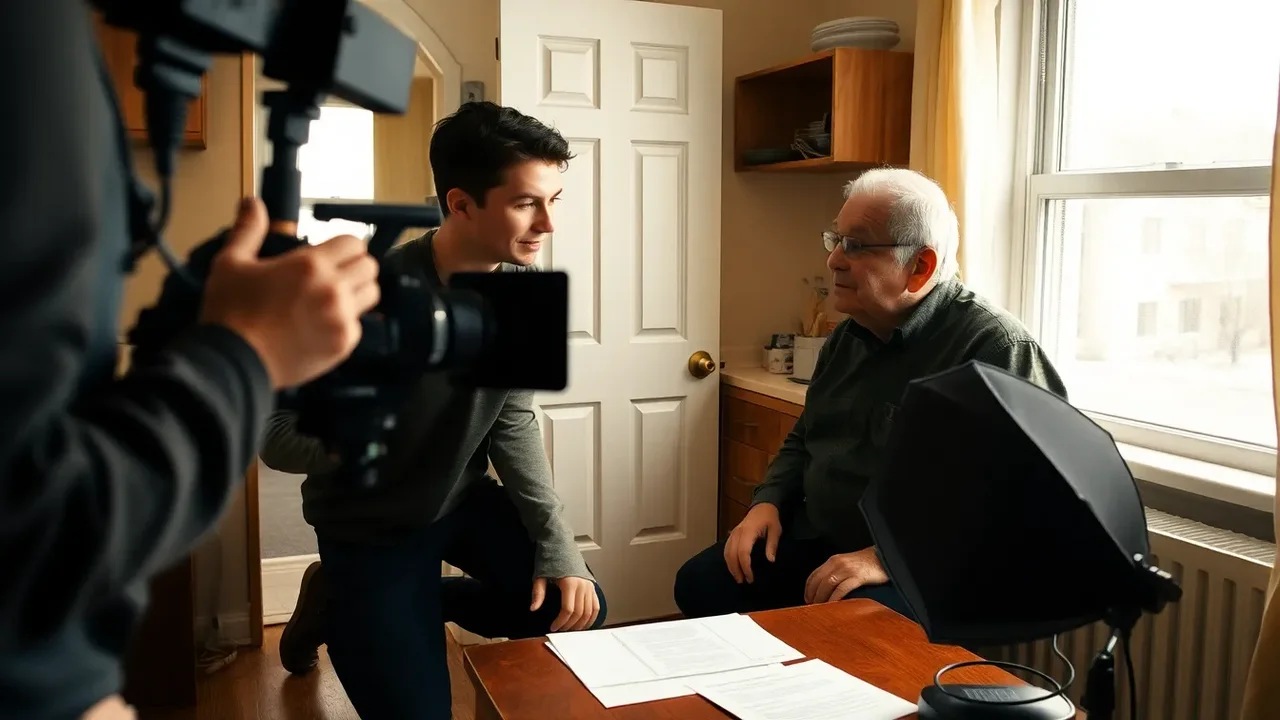
On set, the director's energy sets the tone. If the director is anxious, the child will feel it. If the director is calm and playful, the child will feel safe. The director should speak softly and slowly. Use the child's name often. Get down to the child's eye level. Do not tower over them. Before the take, remind the child of the action, not the emotion. 'You will walk to the window. You will see the rain. You will put your hand on the glass.' Then step back. Let the child own the moment. During the take, watch the child's breath. If they are holding their breath, the emotion may be forced. If they are breathing naturally, the emotion is likely genuine. After the take, wait a moment before saying 'cut.' Let the child come out of the emotion on their own. Then say 'cut' softly. Immediately offer praise that is specific and non-judgmental. 'I loved how you waited before you touched the glass.' Avoid 'You were so sad!' because that labels the child's emotion. Instead, describe the action. This keeps the child in a creative mindset. If the child needs a break, give it. No scene is worth a child's distress. The director should also have a 'reset ritual' after intense scenes. This might be a high-five, a silly dance, or a piece of chocolate. The ritual signals that the emotional scene is over and the child can return to themselves.
Working with Parents and Guardians
Parents and guardians are essential partners, but they can also be a source of pressure. The director should set clear expectations before the shoot. The parent should not coach the child on set unless asked. The parent should not react visibly to the child's performance. If the child looks at the parent for approval, the director should position the parent out of sight or ask them to stay neutral. The director should also check in with the parent about the child's emotional state. 'How is she doing? Does she need a break?' The parent knows the child best. If the parent says the child is tired, the director must listen. On the other hand, the director should protect the child from a parent who pushes too hard. If a parent says, 'Come on, cry like you did at home,' the director should intervene. 'We are not going to force it. We will take a break and try later.' This may be uncomfortable, but the child's well-being comes first. The director should also ensure that the parent understands the content of the short. If the short involves a difficult theme, the parent should have read the script and approved the child's participation. A written agreement about emotional scenes can prevent misunderstandings. The director should never ask a child to keep a secret from their parent. Transparency is key.
Managing Takes and Reset Time
Emotional scenes require careful management of takes. The director should plan the shot list so that the most demanding emotional shots are captured early. After the emotional peak, the child should have a break. Use the break to shoot cutaways, inserts, or wide shots that do not require emotional intensity. This gives the child time to regulate. If the child is crying, do not immediately shoot another take. Let them recover. Offer water. Offer a hug if they want it. Then ask if they are ready to continue. If they say no, respect that. The director can shoot the scene from behind or use a double for the emotional close-up. Remember, the audience does not need to see the child's face to feel emotion. A trembling hand or a still back can be more powerful. Reset time is also important because children may not have the emotional stamina of adults. A five-minute break can save an hour of frustration. The director should build these breaks into the schedule. Do not plan back-to-back emotional scenes. Alternate with light scenes, snack breaks, or games. This pacing keeps the child engaged and prevents emotional fatigue. If the child becomes upset, the director should stop the scene and reassure them: 'You are safe. We are just pretending. You did nothing wrong.' This is especially important for young children who may confuse the fiction with reality.
Camera Proximity and Performance
Camera proximity affects a child's performance. A large camera with a long lens can be intimidating. The director should introduce the child to the camera before the shoot. Let them look through the viewfinder. Let them press a button. This demystifies the equipment. When shooting the emotional close-up, the director may want to use a longer lens so the camera is farther away. This gives the child space. The director can also place a trusted crew member near the camera to give the child a focus point. The child can look at the crew member's eyes instead of the lens. This creates a natural connection. If the child must look directly into the lens, the director should explain that the lens represents a specific person: 'This is your mom's eye. You are looking at her.' This makes the eyeline meaningful. The director should also avoid crowding the child with crew. Keep the set quiet and minimal during emotional takes. Turn off unnecessary monitors and phones. Create a bubble of focus. After the take, the director can review the footage with the child if appropriate. Some children like to see themselves. Others do not. Ask first. For those who do, point out specific moments: 'See how you paused? That was beautiful.' This builds confidence and helps the child understand the craft.
Post-Performance Care and Ethics
After the emotional scene is over, the child may still feel the residue of the emotion. The director should provide closure. This can be a simple conversation: 'The scene is done. Your character was sad, but you are you. You are safe.' Some children need a physical transition. They might change clothes, wash their face, or play a running game. The director should allow time for this. Do not rush the child to the next setup. Emotional care is not optional. It is part of the job. The director should also check in with the parent after the shoot. 'How is she doing? Any changes in mood?' If the child seems withdrawn or distressed, the parent should monitor them. In rare cases, a child may need to talk to a counselor. The director should have resources available. Ethical directing means recognizing that the child's mental health is more important than the film. If a scene requires a child to relive trauma, the director should find another way. No short film is worth a child's lasting harm. The director should also consider the child's future. The footage may be seen by friends, family, or online audiences. The child should not be embarrassed or exploited. The director should avoid close-ups of the child in humiliating or frightening states unless absolutely necessary and approved by the parent. Even then, consider the long-term impact. A child actor is a person first. The performance is a collaboration, not a product.
Debriefing and Emotional Closure
A debriefing session can help the child process the experience. This should be short and child-led. The director can ask: 'What was your favorite part of the scene? What was hard? What do you want to play next?' Avoid asking 'Were you sad?' Instead, ask about the process. 'Did you like how you knocked on the door?' This keeps the focus on action, not emotion. If the child brings up an emotion, acknowledge it. 'Yes, the scene was sad. But it is over now. You did a great job.' The director can also use a closing ritual. For example, ringing a bell, drawing a picture, or saying a special phrase. This ritual marks the end of the emotional journey. It tells the child's brain that the performance is complete. Some productions give the child a small gift or a certificate. This is a nice gesture, but it should not replace emotional care. The director should also give the child a chance to see the final film in a safe setting. If the film contains intense emotion, the director should prepare the child and parent. They can watch together and pause if needed. The child should know that they can ask questions. This transparency builds trust and helps the child understand that their performance was part of a story. It also reinforces that they were never in danger. They were acting.
Legal and Ethical Guardrails
Legal and ethical guardrails protect child actors. The director must know the local laws about child labor, work hours, education, and rest breaks. In many places, a child can only work a certain number of hours per day. They must have a teacher on set if they are school-age. They must have a parent or guardian present. There are also rules about hazardous scenes. A child cannot be exposed to smoke, fire, or dangerous stunts. For emotional scenes, the law may not specifically address psychological safety, but ethics do. The director should follow best practices from child acting organizations. These include: never asking a child to perform a sexualized or degrading scene; never isolating a child with an adult in a private location; never pressuring a child to cry; always providing a safe word; always having a child advocate on set. The child advocate is someone whose only job is to monitor the child's well-being. They can stop the shoot if they see distress. The director should welcome this oversight. It is not an obstacle to creativity. It is a foundation for ethical work. A child who feels safe will give a better performance. A child who feels exploited will shut down. The director should also obtain proper releases and permissions. The parent or guardian must sign a contract that explains the emotional demands of the role. If the script changes, the director must renegotiate. Transparency and consent are ongoing, not one-time events.
Practical Examples from Short Films
To see these principles in action, consider two hypothetical short films. Each example shows how a director can guide a child through an emotional scene without causing harm. These examples are not prescriptive. They are illustrations of the thought process. In the first example, a five-year-old must portray a child who has lost a beloved balloon. In the second, a ten-year-old must portray a child waiting for a parent who never arrives. Both scenes require sadness, but the directorial approach differs based on age and circumstance. The director must always adapt to the individual child.
Example One: The Lost Balloon
The scene is simple. A five-year-old girl, Mia, watches her red balloon float into the sky. She reaches for it. It slips away. She looks up. Her lip trembles. The director needs a close-up of her face. Before the shoot, the director plays a game with Mia. They pretend to be astronauts. They count down and jump. Then the director introduces the balloon. 'This is your special balloon. It is your best friend. We are going to let it go, but it is just a game.' Mia nods. The director places the balloon on a string. The camera is far away with a long lens. The director says, 'When you are ready, let go of the string. Then watch the balloon. You can reach for it if you want.' Mia lets go. The balloon rises. Mia reaches. Her face changes. The director waits. The balloon disappears. Mia looks at the director. The director says, 'Cut. That was wonderful. You watched so carefully.' Mia smiles. The director gives her a high-five and a new balloon to keep. The emotional moment was real, but it was contained in play. Mia was never told to be sad. She was simply allowed to experience the loss of the balloon in a safe context. The director captured the take in one shot. No tears were forced. The performance was authentic because the situation was real to Mia in the moment.
Example Two: The Empty Chair
The scene is more complex. A ten-year-old boy, Leo, plays a child whose mother has not come home. He sits at a table with an empty chair. He looks at the door. He looks at the clock. He puts his head down. The director needs a range of emotions: hope, confusion, disappointment, and quiet grief. Before the shoot, the director talks with Leo about the character. 'Your character loves his mom. He knows she is late. He is not angry yet. He is just waiting. What does waiting feel like in your body?' Leo says, 'My legs get jumpy.' The director says, 'Great. Let your legs be jumpy. Then when you look at the clock, let your shoulders drop.' They rehearse the blocking. Leo walks to the table. He sits. He touches the empty chair. He looks at the door. The director does not ask Leo to cry. Instead, the director asks, 'What would you do if you were trying to stay awake but you were really tired?' Leo says, 'I would rub my eyes.' The director says, 'Do that.' Leo rubs his eyes. The camera captures a moment that looks like grief but is actually a physical action. Later, the director plays a soft instrumental track. Leo listens. His face softens. The director gets the take. After the scene, Leo's real mother is on set. The director says, 'Leo, your mom is here. You can go give her a hug.' Leo runs to his mother. The transition from fiction to reality is immediate. The director checks in with Leo's mother. She says he is fine. They play a game of catch before the next setup. The emotional scene was demanding, but Leo was supported at every step. The director did not exploit Leo's real-life relationship with his mother. Instead, the director used imagination, physical action, and music to create the emotion.
Common Mistakes and How to Avoid Them
Even experienced directors make mistakes with child actors. Recognizing these pitfalls can save a production and protect a child. Below is a list of common mistakes and practical alternatives.
- Mistake: Asking a child to cry on command. Alternative: Create a situation where tears might naturally occur, or shoot the scene without tears. A trembling lip or a blank stare can be more powerful.
- Mistake: Giving long emotional explanations. Alternative: Use one action, one image, or one sensory cue. Children process short, concrete instructions better.
- Mistake: Shooting the emotional scene at the end of a long day. Alternative: Schedule it first thing in the morning or after a short warm-up. Fresh energy produces better focus.
- Mistake: Ignoring the child's signals of discomfort. Alternative: Establish a safe word and honor it immediately. If the child says stop, stop.
- Mistake: Letting parents coach from the sidelines. Alternative: Ask parents to stay neutral and out of sight. The director should be the primary guide.
- Mistake: Using real trauma as emotional memory. Alternative: Use fictional substitution, magic if, or sensory cues. Never dig into a child's personal pain.
- Mistake: Over-rehearsing the emotional peak. Alternative: Rehearse blocking and actions. Save the full emotion for a few takes. Protect the child's stamina.
- Mistake: Forgetting closure after the scene. Alternative: Use a reset ritual, praise specific actions, and give the child time to return to themselves.
Building a Repeatable Directing Framework
A repeatable framework helps directors stay consistent and ethical. The framework should include preproduction, on-set, and post-performance phases. In preproduction, the director reads the script for emotional demands, meets the child and parent, plans safe substitutions, and creates a child-friendly emotional map. On set, the director uses play, concrete language, and sensory cues. The director monitors the child's breath, energy, and boundaries. The director schedules breaks and keeps the set calm. After the performance, the director provides closure, checks in with the parent, and debriefs with the child. This framework is not a rigid formula. It is a checklist that ensures no step is forgotten. The director should also document what works. After the shoot, write a brief note about the child's triggers, favorite games, and effective cues. This helps if there is a reshoot or a future collaboration. It also shows respect for the child's individuality. A framework also includes a plan for the worst-case scenario. What if the child becomes distressed and cannot continue? The director should have a backup plan: shoot the scene from behind, use a double, or cut the scene. The film can be adjusted. The child cannot be replaced. This mindset shift is essential. The director is not extracting a performance. The director is creating a safe space for a young artist to explore. The result may be more powerful than anything a director could force.
Checklist for Emotional Scenes
Use this checklist before, during, and after any emotional scene with a child actor. It is designed to be practical and quick to review.
- Before: Confirm the child knows the action, not the emotion. Check that the parent has approved the scene. Prepare a safe word. Set up a quiet area. Brief the crew to stay calm and quiet.
- During: Give one instruction at a time. Use play, metaphor, or sensory cues. Watch the child's breathing and body language. Take breaks every 20-30 minutes. Praise specific actions, not emotions.
- After: Use a reset ritual. Offer water and a snack. Ask the child how they feel. Thank them for their work. Check in with the parent. Document what worked.
Advanced Techniques for Experienced Directors
For directors who have mastered the basics, advanced techniques can deepen the emotional truth while maintaining safety. One technique is the 'emotional staircase.' Instead of asking for the peak emotion immediately, the director builds the scene in small steps. Step one: the child notices something. Step two: the child moves closer. Step three: the child touches the object. Step four: the child breathes out. Step five: the child looks up. Each step is a separate take or a separate rehearsal. The director can then edit the steps together to create a powerful arc. Another technique is the 'parallel scene.' The director rehearses a completely different scene that has the same emotional structure. For example, if the scene is about saying goodbye to a friend, the parallel scene might be about saying goodbye to a favorite toy. The child practices the parallel scene, then applies the same physical actions to the real scene. This distances the child from the heavy content while preserving the emotional shape. A third technique is 'camera as partner.' The director can give the camera a role. 'The camera is your best friend who is moving away. You are watching them leave.' The child then relates to the camera as a character. This can produce a direct and intimate performance. However, these techniques require experience and sensitivity. They should never be used to manipulate a child into distress. The director must always prioritize the child's well-being over the shot.
Adapting to Neurodivergent Child Actors
Neurodivergent children may process emotion, sensory input, and social cues differently. A director should be flexible and willing to adapt. Some children may find direct eye contact uncomfortable. In that case, the director can allow them to look at a point near the camera or at a trusted object. Some children may need more time to transition between scenes. The director should build in extra buffer time. Some children may be sensitive to loud noises, bright lights, or strong smells. The director should provide a quiet, low-sensory area and ask the parent about triggers. Emotional scenes may require special preparation. For example, a child with autism may benefit from a social story that explains what will happen step by step. A child with ADHD may need frequent movement breaks. A child with anxiety may need a clear safe word and repeated reassurance. The director should never assume that a neurodivergent child cannot perform emotional scenes. With the right supports, they can deliver extraordinary performances. The key is communication with the child and the parent. Ask: 'What helps you feel calm? What makes you uncomfortable? How can I support you?' Then follow through. The set should be inclusive, not just tolerant. This benefits every child actor.
Final Thoughts on Ethical Storytelling
Directing child actors in emotional shorts is a privilege and a responsibility. The camera can capture truth, but it can also cause harm. The director's job is to find the balance. Use play, not pressure. Use imagination, not trauma. Use specific actions, not abstract demands. Build trust before you ask for vulnerability. Provide closure after the scene. Respect the child's boundaries, energy, and developmental stage. Remember that the child is not a tool for your film. They are a collaborator. Their well-being matters more than any award or festival selection. When you protect the child, you often get a better performance. The emotion is real because the child feels safe. They can explore sadness, fear, or joy knowing that they can return to themselves. That is the magic of directing children. You create a world where they can play, and the camera captures the truth of that play. This approach may take more time. It may require rewriting a scene or changing a shot. But it is worth it. The resulting short film will not only be powerful but also ethically made. And the child will carry a positive memory of the experience. That is the mark of a great director.
FAQ - Directing Child Actors in Emotional Shorts
How do I get a genuine emotional performance from a child without causing distress?
Use play, concrete actions, and sensory cues instead of direct emotional commands. Create safe fictional substitutes, never ask a child to relive real trauma, and always provide a safe word and breaks. Genuine emotion often emerges when the child focuses on an action rather than trying to feel a specific way.
What should I do if a child actor starts crying and cannot stop?
Stop the scene immediately. Reassure the child that they are safe and that it was only pretend. Offer water, a break, or a hug if they want one. Do not shoot another take until they are calm and ready. If needed, shoot the scene from behind or use a double. The child's well-being always comes first.
Can I use emotional memory with a child actor?
It is generally not recommended. Emotional memory asks actors to recall personal pain, which can blur fiction and reality for children. Instead, use imagination, magic if questions, or fictional substitution. If a child volunteers a personal story, acknowledge it but redirect to the fictional circumstances of the scene.
How many takes of an emotional scene should I shoot with a child?
Aim for three to five takes of the emotional close-up. More than that can exhaust or overwhelm the child. Schedule the emotional peak early in the day, take breaks between takes, and use wide shots or inserts that require less emotional intensity to give the child time to regulate.
What legal and ethical rules apply when directing child actors in emotional shorts?
Follow local child labor laws regarding work hours, education, and rest breaks. Always have a parent or guardian present, obtain proper releases, and consider having a child advocate on set. Never ask a child to perform sexualized, degrading, or genuinely traumatic content. Transparency and ongoing consent are essential.
How can I create a safe set culture for child actors?
Keep the set predictable and calm. Introduce the child to key crew members, provide a quiet area with snacks and toys, and let only the director or a designated wrangler give performance notes. Use play to build trust, explain each step simply, and honor the child's safe word immediately.
Directing child actors in emotional shorts means using play, concrete actions, and sensory cues instead of pressure. Build trust, honor safe words, schedule emotional scenes early, and provide closure. Protect the child's well-being first, and authentic, powerful performances will follow naturally.
Directing child actors in emotional shorts requires a balance of artistry, developmental awareness, and ethical care. By using play, concrete actions, sensory cues, and clear boundaries, directors can capture powerful performances without causing harm. The child's well-being must always come first, because a safe and respected young actor will ultimately deliver the most truthful and moving work.